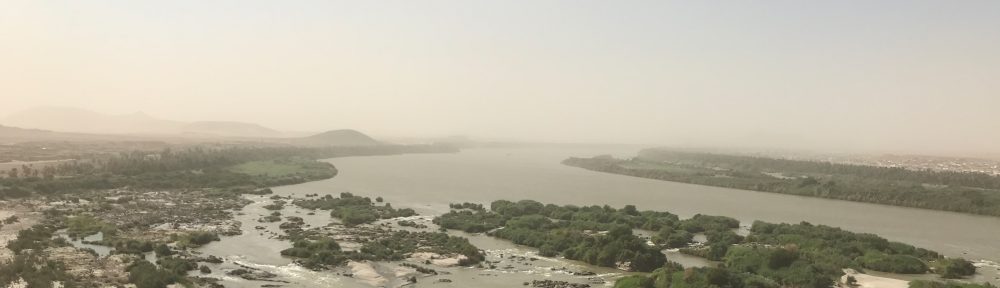
From 27 to 29 June 2026, we had the opportunity to take part in an experimental archaeology seminar at the MAMUZ Museum in Asparn/Zaya, Austria. This seminar, organised by Prof. Budka in collaboration with the University of Vienna, brought together practical craft, archaeological questions and scientific documentation.
For us as two LMU students, it was a chance to connect practical training with research questions that are also relevant to the LMU-based ERC DiverseNile project. Our work had a twofold focus. First, we wanted to better understand the production process of Nubian-style pottery, from the preparation of raw materials to the finished vessel. Secondly, we were interested in the potential of organic residue analysis on pottery: Which chemical markers can be detected after cooking? Which ones might be absent? And how precise can such analyses be when used to reconstruct past food practices?
In archaeology, students often encounter pottery as a finished object. We learn about vessel shapes, fabrics, surfaces, firing conditions and typologies. Yet this theoretical knowledge can convey only part of what pottery production actually involves. Preparing the clay, selecting and processing temper, shaping the vessel, dealing with cracks, polishing the surface and controlling the firing atmosphere all require practical decisions and embodied knowledge. By making pottery ourselves, we were able to experience at least part of this chaîne opératoire.
The second strand of the experiment concerned organic residue analysis. Over the past decades, lipid residue analysis has become an important method for investigating ancient diet, food preparation and vessel use. Lipids absorbed into the walls of ceramic vessels can sometimes survive for long periods and provide information about processed products such as animal fats, dairy products, aquatic resources, plant oils, waxes or cereals. At the same time, the method has limits. Some substances preserve better than others, some foodstuffs may leave only weak traces, and repeated heating, cleaning or reuse can complicate interpretation. Our cooking experiments, carried out under the supervision of Dr. Giulia D’Ercole, were therefore designed as small but controlled tests. We know what was cooked, how it was cooked and under which conditions the vessel was used.
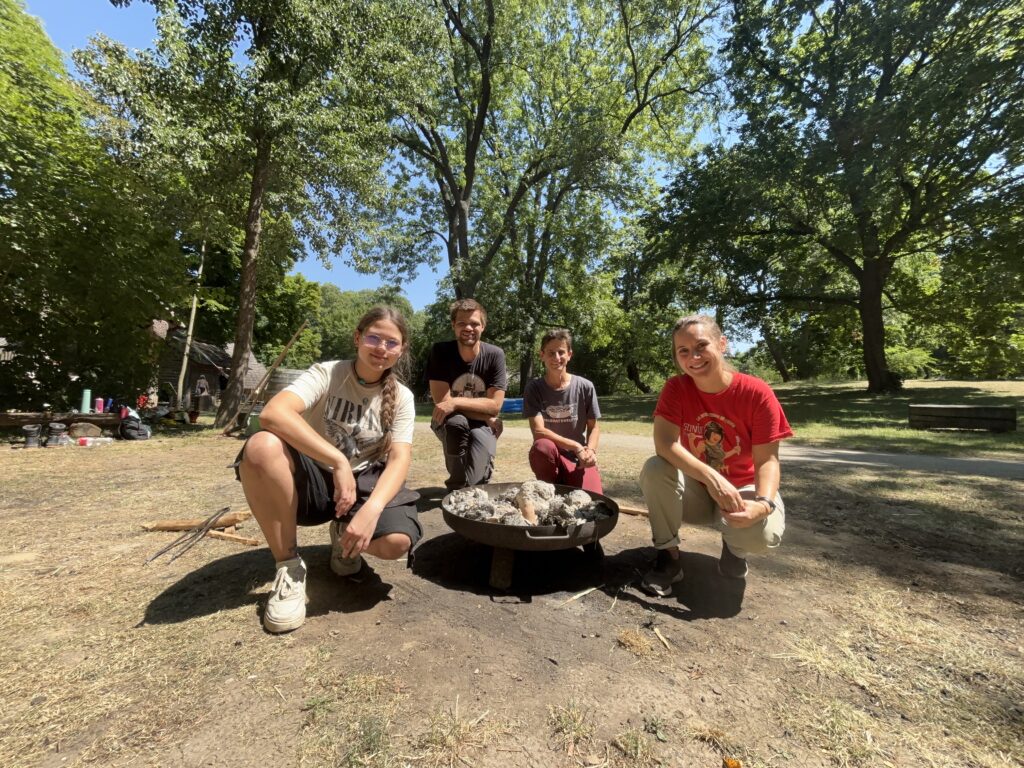
Day 1: clay, dung and sorghum porridge
The first day began with the preparation of raw materials. We ground cow dung on a grinding stone, using another stone as a hand tool. We also prepared local Austrian clay by crushing it and removing stones and other larger inclusions by hand. The aim was to produce a workable clay paste tempered with cow dung.
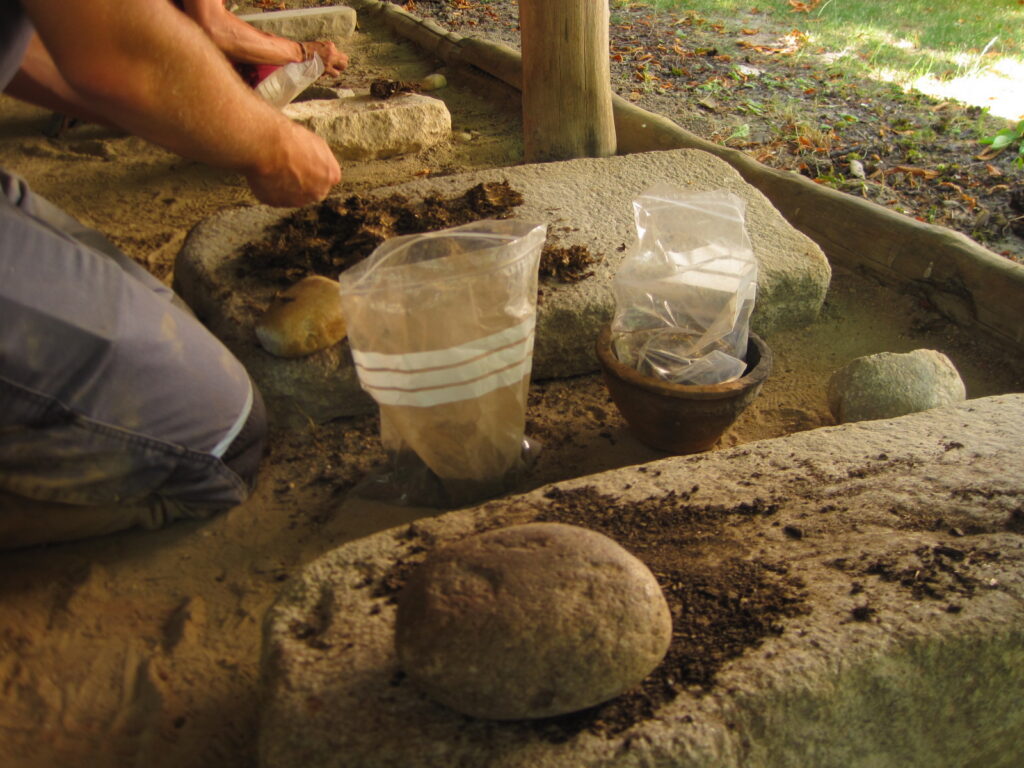
Our first mixture consisted of approximately two-thirds clay and one-third dung temper. The result was strikingly coarse. During shaping, cracks appeared quickly, and it became clear how strongly the texture of the temper affects the forming process. We had to keep adding water to keep the clay paste workable.
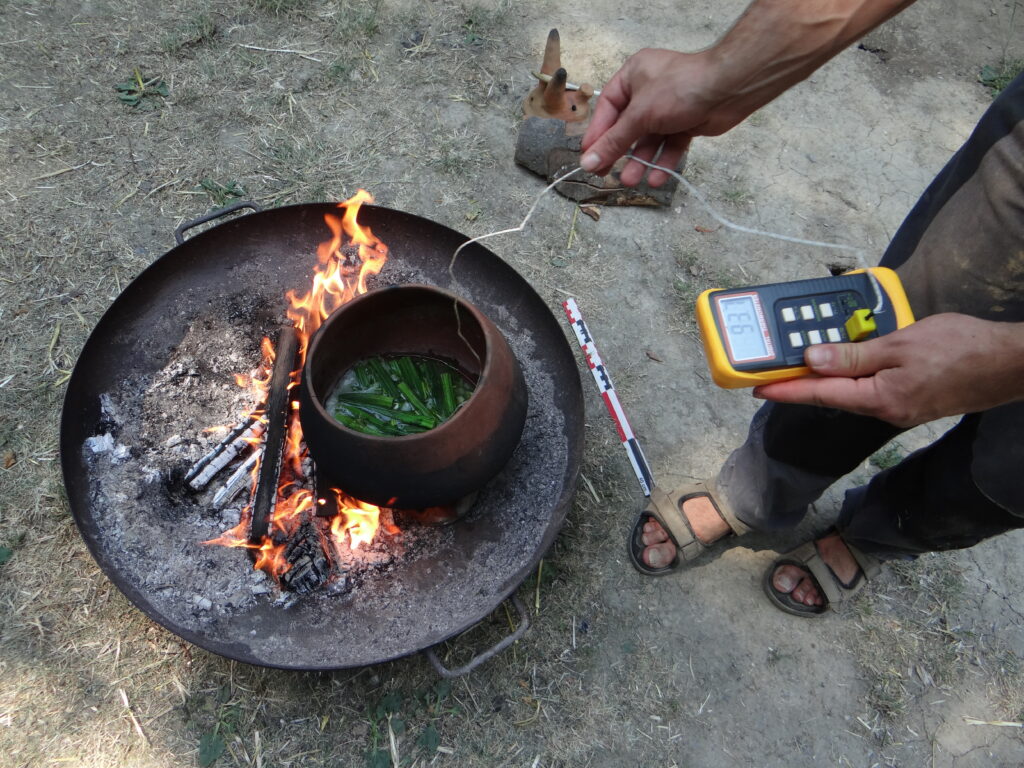
On the first day, each of us produced two vessels with cow-dung temper. In parallel, cooking experiments were carried out in a replica of a Nubian-style cooking pot. This pot was not made from Nile silt, which is important to keep in mind for the later interpretation of the residue analysis. On the first day, sorghum porridge was cooked with water only. This provided a useful point of comparison for the residue experiment, as a water-based cereal preparation may be expected to leave different traces from recipes involving milk, fruit or animal products. During the experiments, we documented the process, took photographs and measured temperatures. We also ground sorghum on a grinding stone, adding another practical perspective on food preparation.
Day 2: testing recipes and cooking fish soup
On the second day, we ground the dung again, this time more finely with a mortar. This simple step already showed how much time, physical effort and judgement can lie behind a finished vessel. We also experimented with cow dung collected from the pasture instead of dung from the stable. This material contained fewer straw inclusions and behaved differently during preparation.
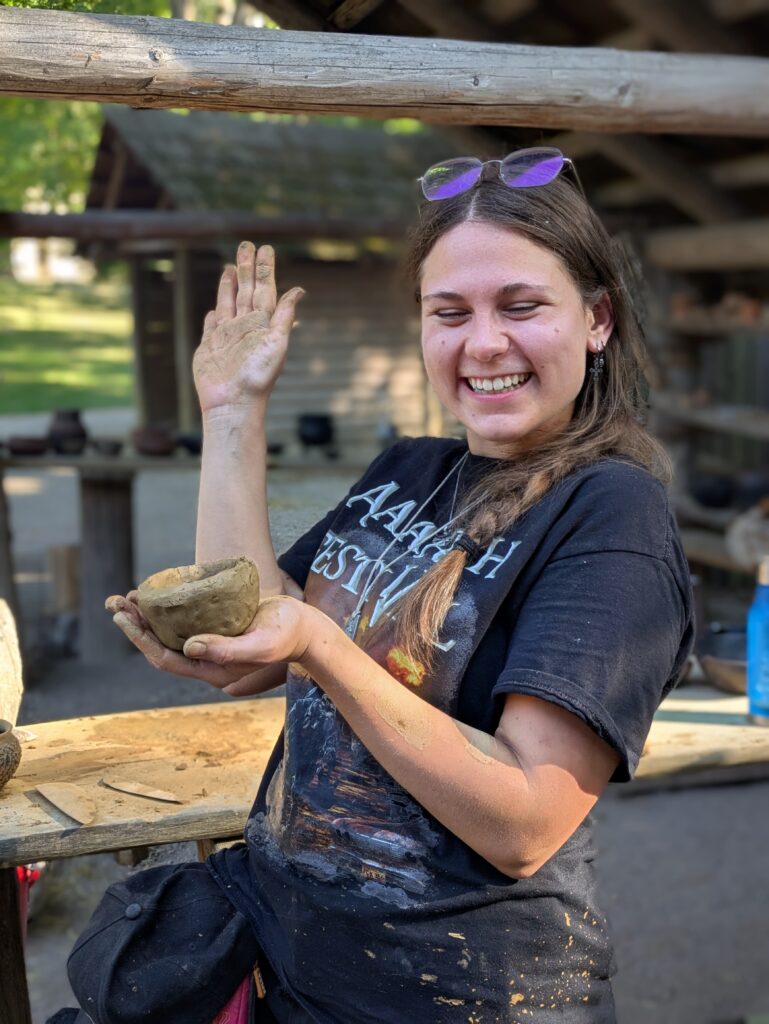
We produced one larger vessel with a thinner rim using the finer pasture dung, as well as a small conical bread mould. One aim was to test different proportions of clay and temper. The bread mould contained a higher ratio of finely ground dung, which was intended to make drying and firing easier, especially because the vessels had only about one day to dry and the rim was relatively thick.
We also polished the pottery. This step demonstrated that surface treatment is not only a matter of appearance. It may influence how a vessel feels, how porous it is and how it performs during use.
These variations were useful because they showed that cow dung is not a uniform material. Its properties depend on where it was collected, how dry it is, what the animal had eaten and how finely the material is processed. Such factors may also have affected ancient pottery production.
The cooking experiments in the second half of the day continued with sorghum porridge and then focused on fish soup. A second porridge was prepared with goat’s milk; in the first batch, fruit was added, which also made the porridge particularly tasty. This created a second cooking event with expected chemical signatures that differed from the water-based porridge of the first day. While the water-based porridge may mainly be relevant for cereal-related markers, the porridge cooked with goat’s milk could potentially leave traces connected to dairy fats.
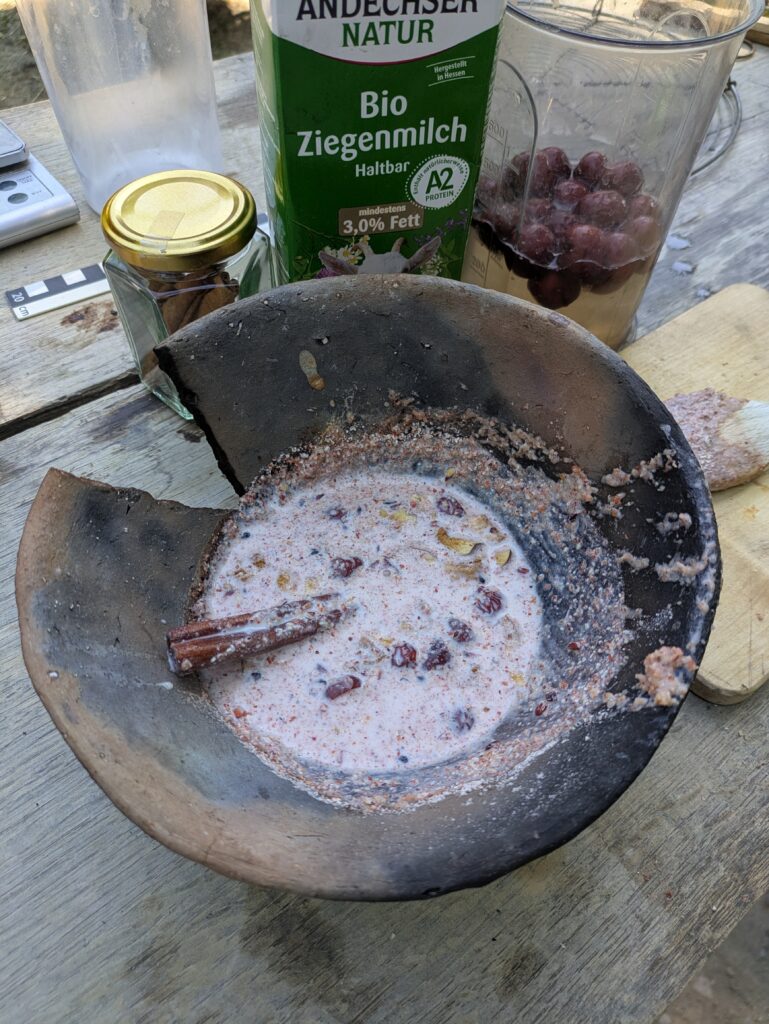
For the fish soup, we cooked two batches using trout, onions, okra, parsley, water and salt. Our tasks included cutting the ingredients, documenting the procedure, taking photographs and measuring temperatures. The controlled nature of the experiment is especially important for the later residue analysis. Since the cooking history is known, the analytical results can be compared with the expected chemical signals.
Day 3: firing pottery with cow dung
The third day was dedicated to firing. We used cow dung as fuel and aimed for a firing atmosphere with limited oxygen. The goal was to produce a reduced firing effect, visible in black surfaces, black rims or a black core. A more oxidising atmosphere would instead have produced redder colours. To encourage reduction, we created a straw bed, placed our pottery upside down on it and covered the vessels with a dome of cow dung.
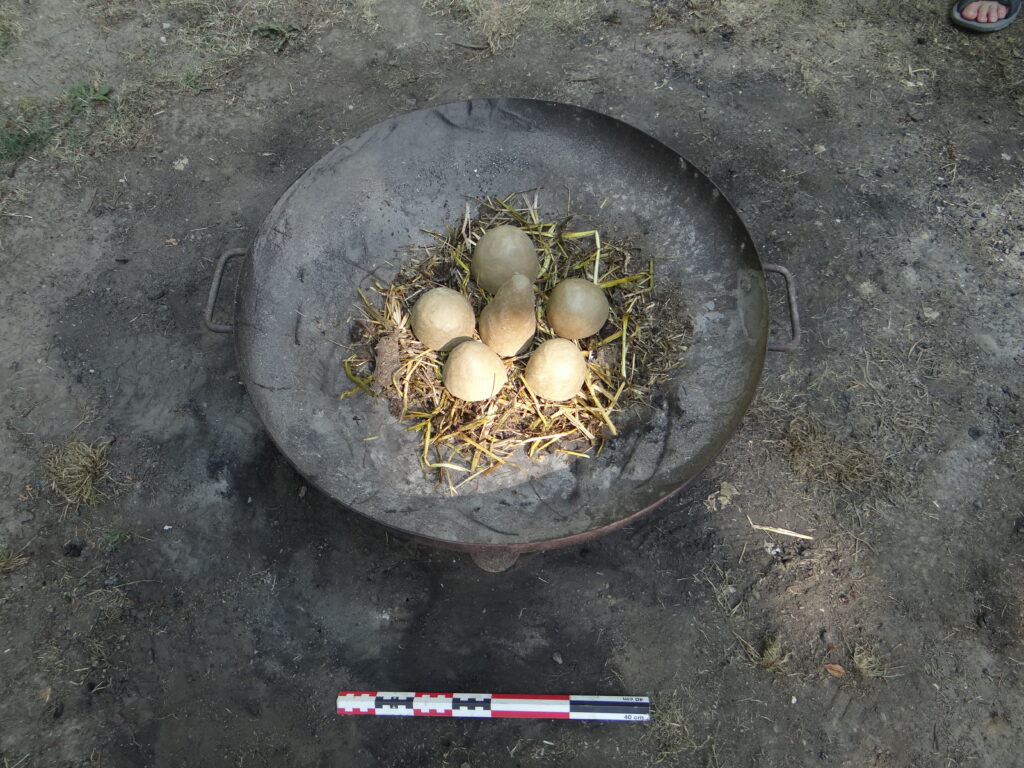
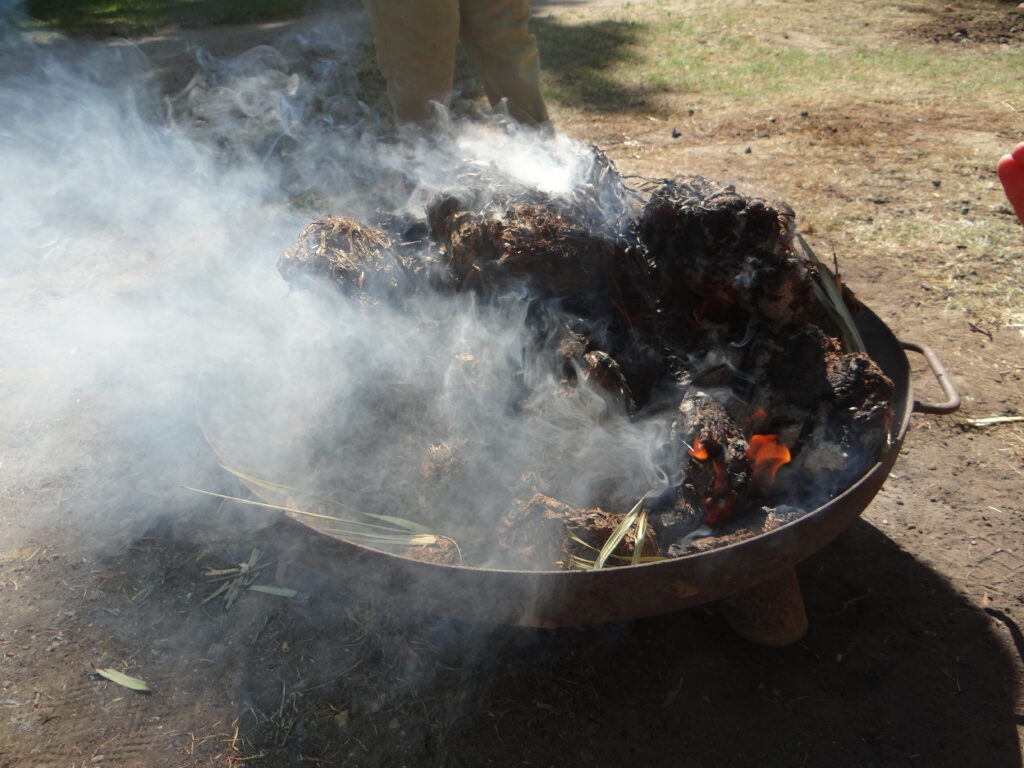
Maintaining such firing conditions was challenging. The fire had to be kept alive, but the firing structure also had to be arranged in a way that restricted oxygen from reaching the vessels. Achieving a stable temperature while controlling the atmosphere proved to be one of the most difficult parts of the experiment.
The firing was carefully documented through photography, 3D scanning and temperature measurements. The highest recorded temperature was 790°C. In the end, the firing was successful. The pottery was fired, and parts of the vessels showed reduced firing conditions. The results were not completely uniform, but that is precisely what made the experiment valuable. It showed how difficult it is to control an open firing with dung fuel and how variable the finished products can be.
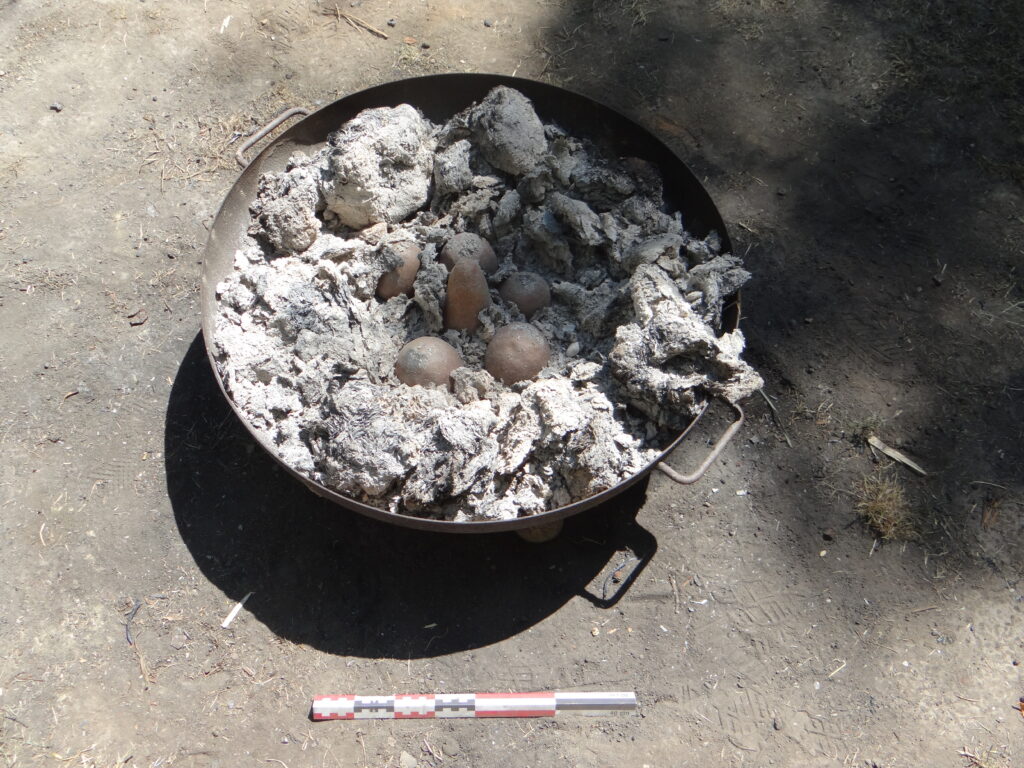
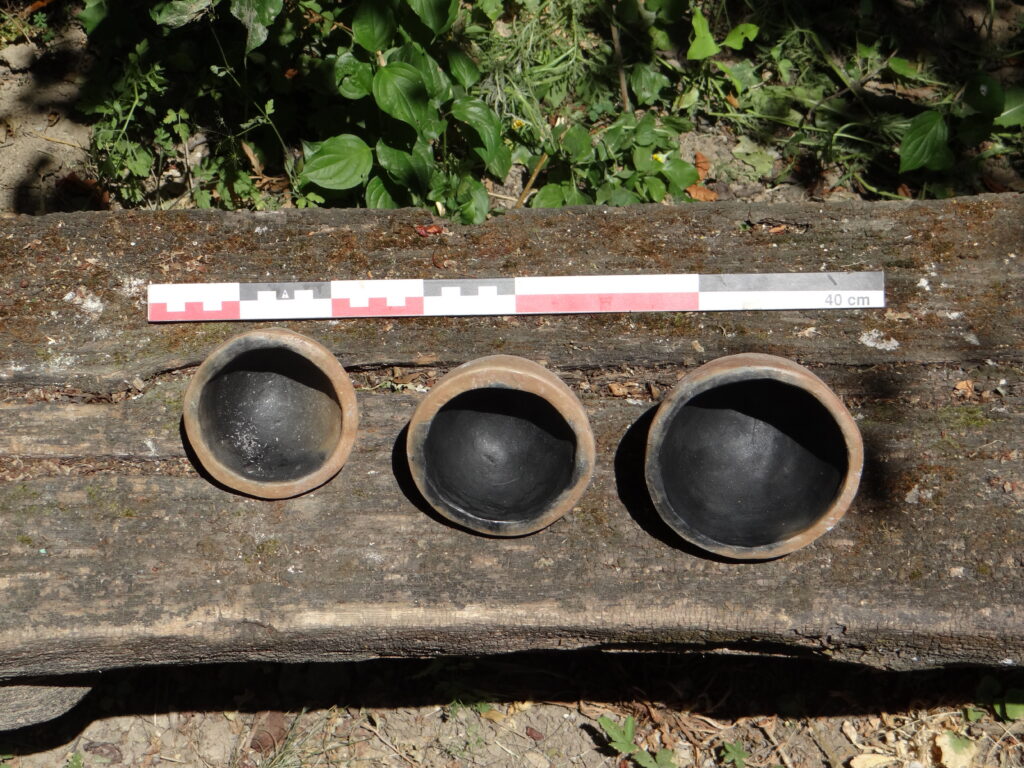
After the firing, we carried out a small test to see how well the vessels retained liquid. After 30 minutes, the water level had dropped by 5 mm. This simple observation raised further questions about porosity, vessel function and possible post-firing treatments.
Beyond the pottery experiment
During the three days, we also had the opportunity to visit the exhibition at the MAMUZ Museum and to observe other experimental stations. These included blacksmithing, stone working, bone carving and experiments connected with burial practices. This wider setting was inspiring because it placed our pottery work within a broader experimental archaeological framework. Watching other craftspeople and researchers work directly with materials, tools and fire made clear how much can be learned through practice.
Thoughts on future experiments
The main aim of the seminar was achieved. We carried out the production process of dung-tempered pottery from beginning to end. We prepared the raw materials, tested different recipes, shaped vessels, polished them, fired them and carried out a first simple test of their ability to hold water. This experience made the technological process much more tangible than a purely theoretical discussion could have done.
At the same time, many questions remain open. How exactly were larger conical bread moulds produced? Can we detect how often pottery was re-fired, either experimentally or archaeologically? How does repeated heating affect the ceramic fabric and the preservation of absorbed residues? And, most importantly for our current experiment, which biomarkers will be detectable in the cooking pot, and which will not? Will the analyses show differences between water-based porridge, goat’s-milk porridge and fish soup? And how clearly can such different cooking events be distinguished after heating, absorption and possible mixing of residues within the ceramic fabric?
These are all questions that Giula D’Ercole will be seeking to answer over the coming years as part of her new research project. Experimental archaeology rarely provides simple answers. Instead, it helps us ask better questions. In Asparn/Zaya, grinding dung, preparing clay, shaping vessels, struggling with cracks, controlling fire and cooking in replica pots reminded us that ancient pottery was not simply an artefact category. It was the result of knowledge, skill, experience and repeated choices.
Many thanks go to Julia Budka, Giulia D’Ercole and the University of Vienna for giving us the opportunity to take part in this experimental archaeology seminar. We are also grateful to everyone involved at Asparn/Zaya for the inspiring discussions, practical support and wonderful working atmosphere.
Suggested reading
Budka, J. and D’Ercole, G. 2022. An Experimental Approach to Assessing the Tempering and Firing of Local Pottery Production in Nubia during the New Kingdom Period. EXARC Journal 2022, issue 2.
Cramp, L. J. E. and Evershed, R. P. 2014. Reconstructing Aquatic Resource Exploitation in Human Prehistory using Lipid Biomarkers and Stable Isotopes. In H. D. Holland and K. K. Turekian, editors, Treatise on Geochemistry: Archaeology and Anthropology, second edition, volume 12, 319–339. Amsterdam: Elsevier.
Dunne, J., Mercuri, A. M., Evershed, R. P., Bruni, S. and Di Lernia, S. 2016. Earliest direct evidence of plant processing in prehistoric Saharan pottery. Nature Plants 3, 16194.
Evershed, R. P. 2008. Organic residue analysis in archaeology: the archaeological biomarker revolution. Archaeometry 50, issue 6, 895–924.
Evershed, R. P. 2008. Experimental approaches to the interpretation of absorbed organic residues in archaeological ceramics. World Archaeology 40, issue 1, 26–47.
Hammann, S. and Cramp, L. J. E. 2018. Towards the detection of dietary cereal processing through absorbed lipid biomarkers in archaeological pottery. Journal of Archaeological Science 93, 74–81.
Roffet-Salque, M., Dunne, J., Altoft, D., Casanova, E., Cramp, L. J. E., Smyth, J., Whelton, H. and Evershed, R. P. 2017. From the inside out: upscaling organic residue analyses of archaeological ceramics. Journal of Archaeological Science: Reports 16, 627–640.