The last two days were really nice – hot and sunny. Today, the weather has changed again, a very strong wind made work difficult today and the temperatures are again a bit cooler.
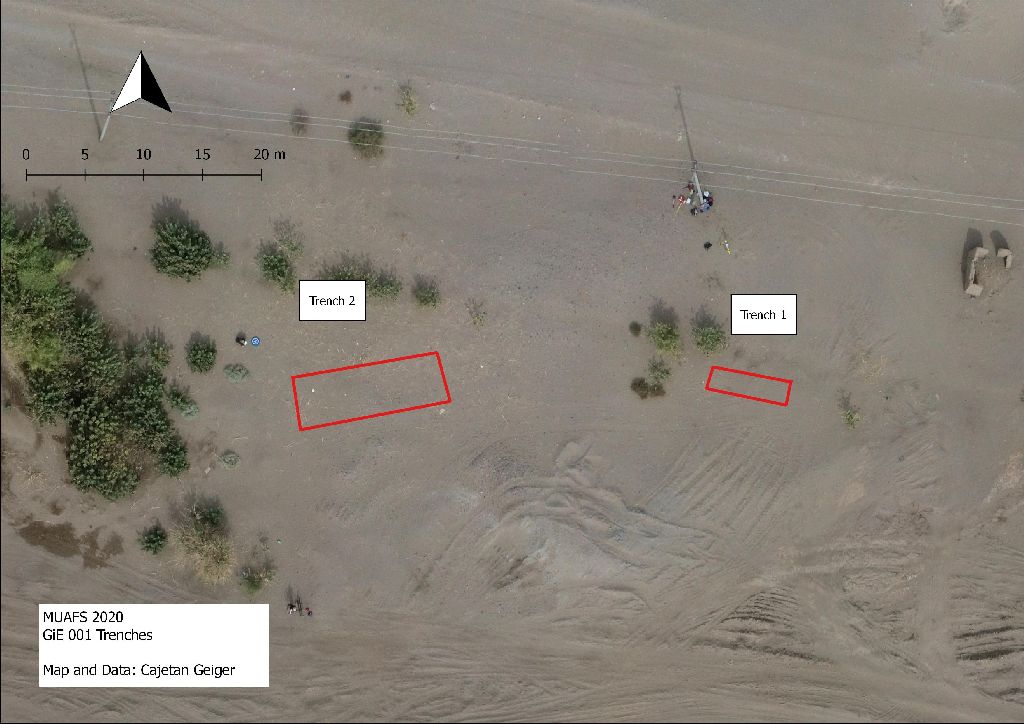
Since work in the field with such a wind was not possible after lunch, I spent this afternoon playing with some statistics for the two test trenches in GiE 001 where we are currently working.
Of course, any interpretation based on two test trenches only must remain very tentative, but I believe there are already some interesting facts and possible glues for understanding the function of the site. The domestic character of GIE 001 was already noted by Vila and we confirmed its dating to the New Kingdom with a strong Kerma presence in 2019. What new data derives now from our test trenches?
Let’s look at the pottery – the surface material was mixed in both trenches, comprising Kerma, Egyptian New Kingdom, Napatan and Christian wares. Many of the sherds are very eroded (wind-worn).
Trench 1 only yielded a total of 328 sherds, of which 13 are diagnostic pieces (4%). 271 pieces from all sherds (83%) can be dated to the Kerma/New Kingdom period.
This pattern is repeated in Trench 2 were a larger quantity of pottery was found. As of today, a total of 3709 sherds were collected, 177 of which are diagnostic pieces (5%). In this trench, 3203 sherds belong to the Kerma/New Kingdom horizon (86% and thus the clear majority).
Especially relevant was today’s muddy layer in a deep level which yielded only 13 small pottery sherds, but of which all are New Kingdom in date, 6 wheel-made of the Egyptian tradition, 7 handmade Nubian wares.
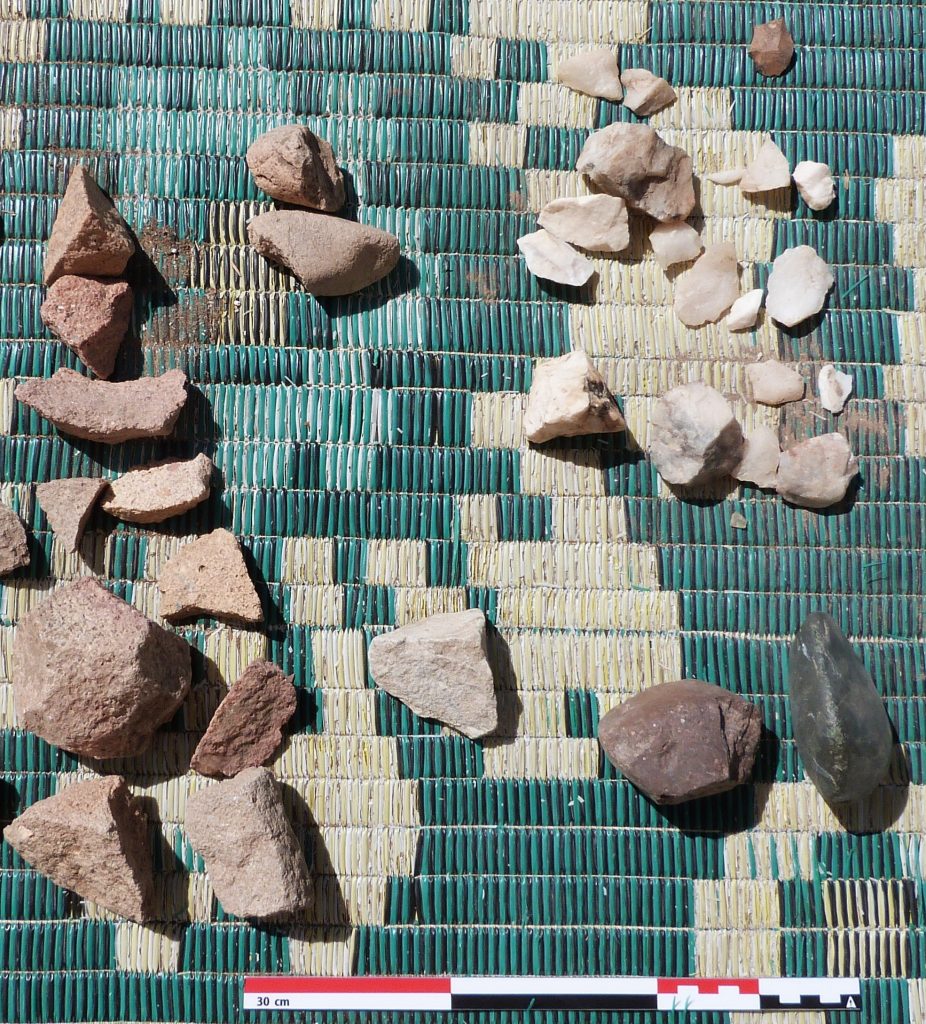
The second most frequent category of finds after pottery are stone tools and lithics. These were quite numerous, especially in Trench 2, where for example 102 pieces were collected from the surface layer. The stone artefacts are mostly flakes and here predominately quartz flakes; very frequent are also fragments from sandstone grindstones and handmills. A few chert flakes and some pounders and hammer stones were also noted.
All in all, the stone artefacts seem to attest first of all quartz working and grinding of materials. This fits perfectly to the topographical situation of the site – just south of GiE 001, there is a large quartz vein visible on the surface. And this might very well be connected with ancient gold working like it is well attested in the general region of Upper Nubia and especially around the main centres of the New Kingdom empire like Sai, Sesebi and Amara West.
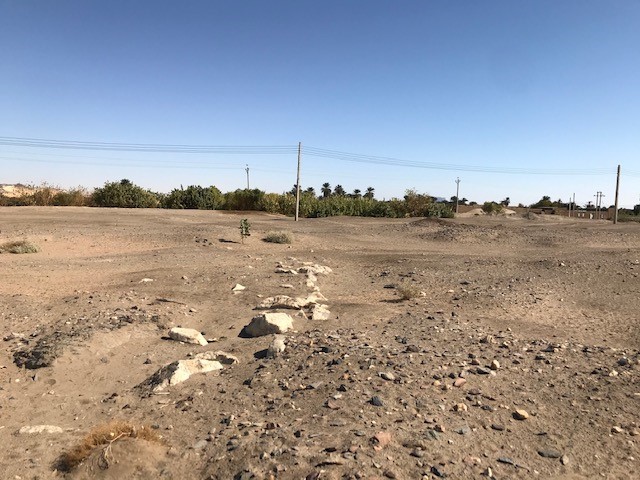
In the 1970s, Vila documented a gold working site at Kosha East (the neighbouring village of Ginis) where New Kingdom and Napatan ceramics on the surface next to a quartz vein resemble the evidence from GiE 001.
Excavation and processing of data at GiE 001 must of course continue, but for now, this New Kingdom ocupation site seems associated with gold exploitation in the periphery of Sai Island. Exciting first glimpses into the use of the Bronze and Iron Age landscapes in the MUAFS concession!