Now available in open access: An Egyptian villa with animal pens in New Kingdom Nubia

We are very pleased to share that our article “An Egyptian Villa with Animal Pens in New Kingdom Nubia: Reinterpreting Building H4 and Area H4W on Sai Island”, published last year in the Journal of Urban Archaeology, is now available in open access. The study presents a new interpretation of part of the residential quarter of Sai City and explores how recent advances in digital reconstruction can contribute directly to archaeological research.
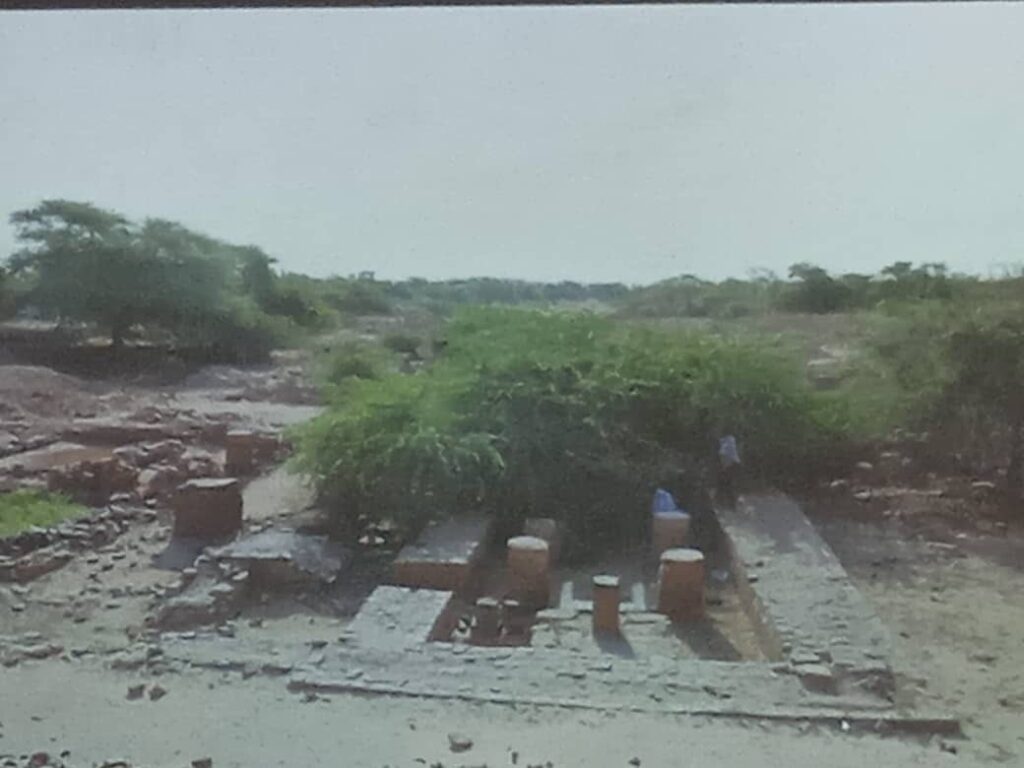
Sai City was a walled Egyptian temple town on Sai Island in modern Sudan. Our article revisits Building H4 and adjoining Area H4W, a mid-Eighteenth Dynasty residential complex excavated in the 1970s and reconstructed by Ingrid Adenstedt in 2016 as part of the ERC AcrossBorders project.

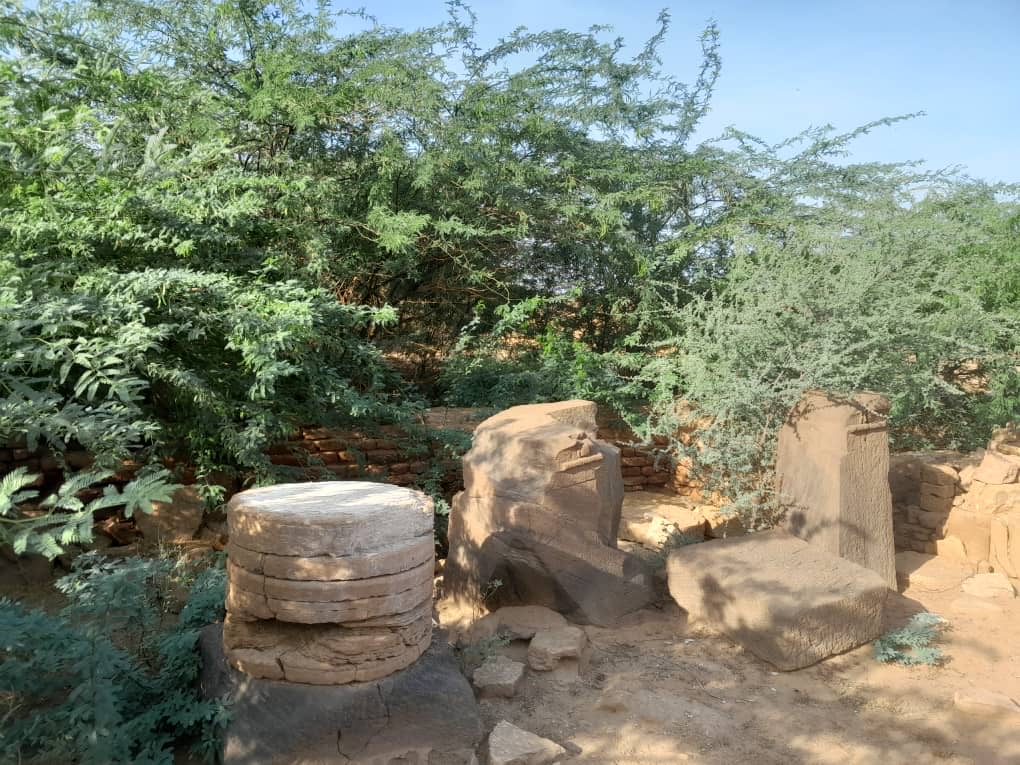
The reinvestigation began with Robert Kalasek’s terrestrial laser scan. Re-examining the data revealed curved structures beneath a later building in H4W, while sections generated from the scan placed them at approximately the same level as the original surrounding walls. Their dimensions, construction and position within rectangular enclosures argue against an interpretation as silos or ovens and closely parallel animal pens, most likely pigsties, excavated at Amarna. The wall thicknesses and shared-yard arrangement are comparable, while faunal remains elsewhere at Sai indicate that pigs were bred locally. We therefore suggest that H4W contained a small-scale pig-keeping area with at least two pens and a shared yard.
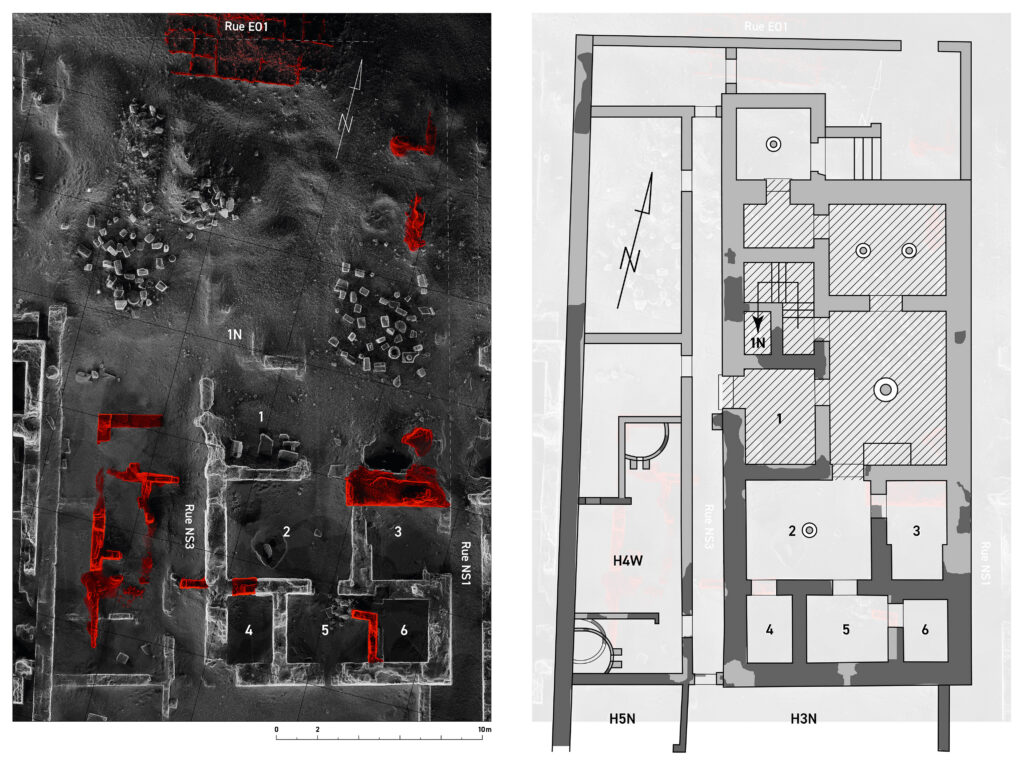
Re-examination of the scan also revealed a bed niche in Room H4/3 and an L-shaped internal wall characteristic of contemporary stairwells in H4/1N. These features allow H4 to be reconstructed as a typical Egyptian villa with a tripartite plan: private rooms at the rear, a main hall and stairwell in the centre, and an entrance section at the front. A preserved threshold at the southern end of the narrow passage between H4 and H4W further indicates that what had previously been understood as a public street was instead a private alleyway. H4 and H4W thus formed a single enclosed estate comprising an elite residence and its associated infrastructure.

Digital reconstruction played an important role in reaching these conclusions. Recent advances in real-time rendering allow highly detailed scans of architectural remains, objects and landscapes to be used at their correct scale without first reducing them to heavily simplified geometries. Using Unreal Engine 5, we created a photorealistic, on-the-ground reconstruction around the original scan data. Hypothetical walls, roofs and other architectural features were reconstructed directly around the surviving remains and explored interactively at human scale.

Unreal Engine’s photorealism allows materials, spatial relationships and environmental conditions to be investigated with sufficient specificity for the reconstruction to function as a research environment. Individual construction layers can be added or removed, alternative solutions can be compared, and the reasoning behind particular choices can be made interactively transparent. Navigating the reconstruction at human scale also makes features such as narrow passages, restricted access and the confined nature of Sai’s urban planning immediately tangible.
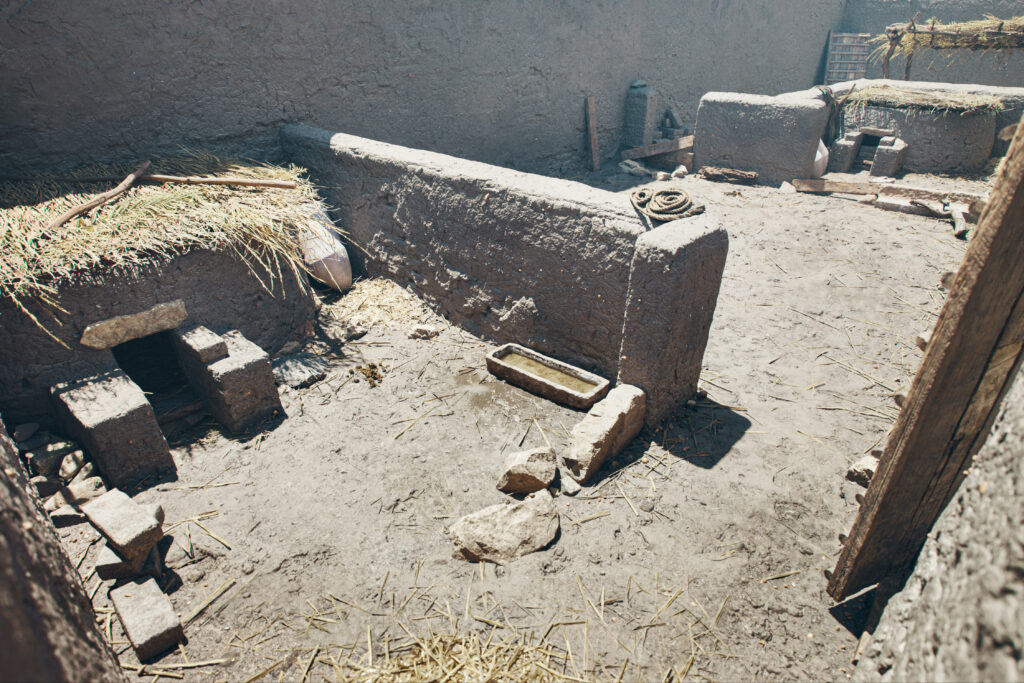
The geopositioned model additionally reproduces the changing position of the sun at Sai according to the time of day and season. This proved particularly important when considering how the proposed pig pens were roofed. Pigs are highly susceptible to heat stress, making adequate shade essential. We tested an elevated grass-and-pole roof that would have allowed a person to pass beneath it for maintenance. During the hottest months, however, this solution would have left the interiors of both pens exposed to direct sunlight for several hours at critical times of day. The more plausible reconstruction is therefore a light, removable roof placed directly on top of the low pen walls. This accords with the archaeological evidence from Amarna and would have kept the animals shaded while still allowing the roof to be removed for cleaning and maintenance.

This example illustrates the wider potential of real-time digital reconstruction. The model is not merely a final illustration of conclusions reached by other means. It brings together scan data, excavation records, architectural parallels and environmental conditions in an interactive space in which the physical consequences of different hypotheses can be tested. In this case, the process helped us recognize previously overlooked features, reconsider the organization of an entire estate and investigate a practical aspect of animal husbandry that would otherwise have remained difficult to assess.

The close parallels between the H4 estate and houses at Amarna are also significant for our understanding of Egyptian domestic architecture. Amarna is still frequently treated as an exceptional city, yet its villas adhered to traditions found elsewhere in Egypt and, as the evidence from Sai now shows, beyond Egypt’s borders. The villa and its associated animal pens represent a distinctly Egyptian form of domestic and social organization adapted to the confined setting of a Nubian temple town: another manifestation of “Egypt in microcosm” in New Kingdom Nubia.

The publication is available here:

Carl G. Elkins, Julia Budka & Chloë Ward, “An Egyptian Villa with Animal Pens in New Kingdom Nubia: Reinterpreting Building H4 and Area H4W on Sai Island”, Journal of Urban Archaeology 12, 2025, 33–51, https://doi.org/10.1484/J.JUA.5.151426.
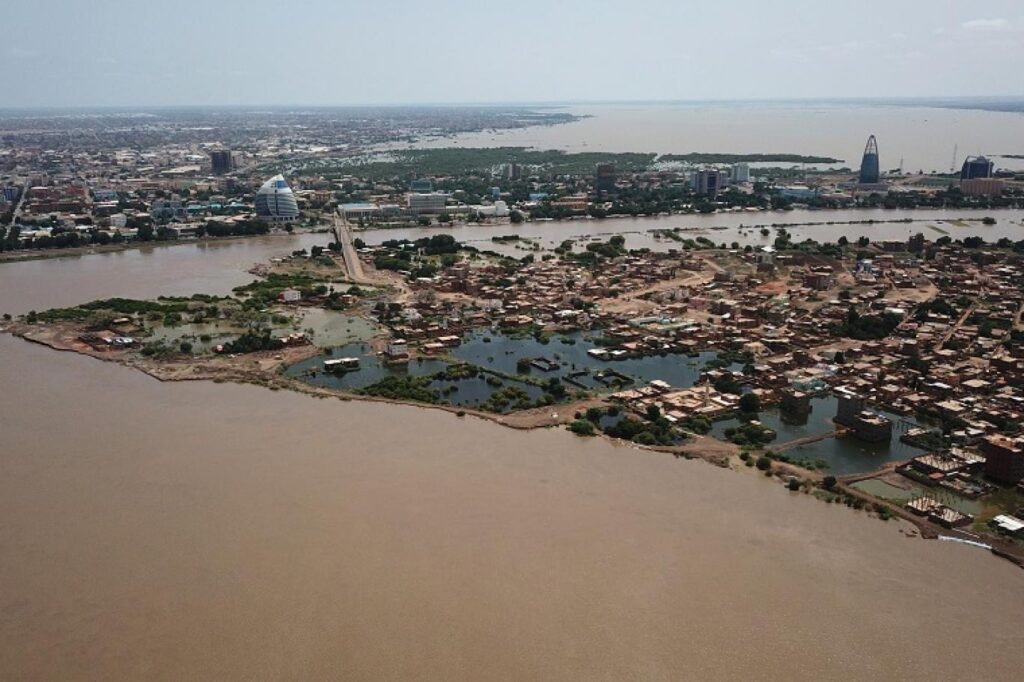
Risks of Climate Change and Projections on Cultural Heritage in Sudan?

Autumn Season and its Impact on Antiquities in Sudan

Sudan experiences a desert climate with minimal seasonal variation, but the autumn season can still have an impact on archaeological sites. The effects of climate change and environmental factors can exacerbate the deterioration of ancient structures and artifacts.

Impacts of the Autumn Season on Antiquities in Sudan:

  • Increased Rainfall: Heavy rainfall can cause erosion and damage to archaeological sites, especially those in fragile or unstable conditions.
  • Strong Winds: Strong winds can lead to the degradation of structures and the loss of artifacts.
  • Flooding: Flooding can damage archaeological sites, especially those located near rivers or in low-lying areas.

Conservation Efforts:

  • Site Monitoring: Regular monitoring of archaeological sites to assess the impact of environmental factors and take necessary conservation measures.
  • Risk Assessment: Conducting risk assessments to identify potential threats and develop strategies for mitigation.
  • Community Engagement: Engaging local communities in the conservation and protection of archaeological sites.

Importance of Protecting Sudan’s Cultural Heritage:

Sudan’s cultural heritage is invaluable, and it is essential to protect it from environmental degradation and human impact. Conservation efforts are necessary to preserve the country’s rich history and cultural identity for future generations.

Challenges and Opportunities:

  • Climate Change: Climate change poses a significant threat to Sudan’s cultural heritage, and it is essential to develop strategies to mitigate its impacts.
  • Sustainable Development: Balancing economic development with cultural heritage conservation is crucial to ensure the long-term preservation of Sudan’s archaeological sites.
  • International Cooperatio: International cooperation and support are necessary to support conservation efforts and protect Sudan’s cultural heritage.

Climate change poses a significant threat to cultural heritage in Sudan, as it can lead to the deterioration and erosion of archaeological sites, especially with harsh weather conditions such as heavy rainfall and strong winds. Rising sea levels can also lead to the submersion of coastal heritage sites and erosion of archaeological and architectural structures. Additionally, changes in the ecosystems surrounding heritage sites can affect their ecological balance and further complicate conservation efforts.

Main Impacts of Climate Change on Cultural Heritage in Sudan:

  • Erosion of archaeological sites: Heavy rainfall and strong winds can cause erosion and deterioration of archaeological sites.
  • Rising sea levels: Can lead to the submersion of coastal heritage sites and erosion of archaeological and architectural structures.
  • Changes in surrounding ecosystems: Can affect the ecological balance around heritage sites and complicate conservation efforts.

Efforts to Protect Cultural Heritage in Sudan:

  • Climate risk assessment: Climate risks are assessed for cultural sites to determine necessary protection measures.
  • Emergency plans: Emergency plans are developed to protect heritage sites from climate change impacts.
  • Use of technology: Remote sensing and 3D laser scanning techniques are used to assess the condition of heritage sites and monitor surroundings climate

Environmental changes, floods, and mining pose a greater threat to antiquities than wars!

There are archaeological sites in Sudan that are affected by the environment, especially in the northern regions of Dongola. Some of these sites include:

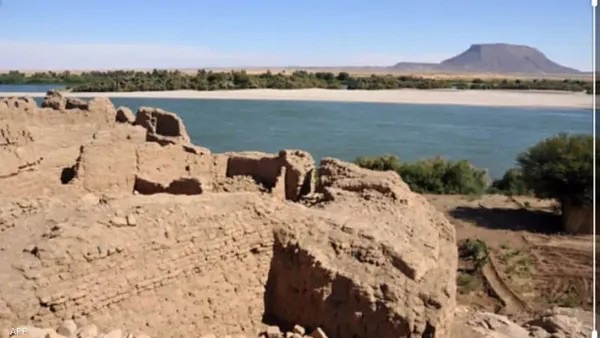
  • Sai Island Archaeological Site: An island containing tombs, Pharaonic sites, and graves dating back to thousands of years, with recent signs of severe mining activities on the island.
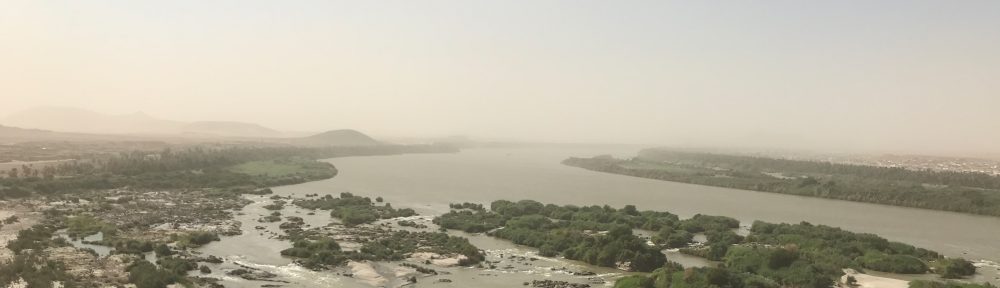
A view from Sai Island.
  • Old Dongola: A historical city containing archaeological sites consisting of palaces, remains of churches, tombs, and domes, considered one of the important cities during the Middle Ages, affected by rising groundwater levels or Nile floods.
  • Other Archaeological Sites in Sudan: Such as Kerma, suffering from the impacts of climate change, especially soil erosion, floods, and landslides.
  • Al-Bajrawiya: These archaeological sites are affected by strong winds and heavy rains, causing erosion to structures and antiquities.
  • Additional Archaeological Sites in the Nile River State and the Northern State: All are affected by climate change, desertification, and environmental degradation.
  • Meroe Archaeological Sites: Affected by climate change and desertification, leading to the deterioration of ancient structures and antiquities.
  • The Royal City of Meroe: All these are important archaeological sites affected by environmental changes, desertification, and environmental degradation.
Situation at the Royal City of Meroe.
One of the temples at the Royal City of Meroe and glimpses of environmental change.

Some sites received attention and archaeological work during the Qataris project to protect Nubian antiquities, but environmental changes were stronger, requiring more serious and urgent attention to preserve them from deterioration and loss. Again, with recent environmental changes in Sudan, these sites, along with newly discovered ones, are affected by climate change, desertification, and environmental degradation, threatening their destruction and the loss of ancient cultural heritage in Sudan.

It’s crucial to note that these archaeological sites require special attention to protect them from deterioration and ensure their continuity for future generations.

Communicating the huge attractiveness of Egyptian and Nubian archaeology

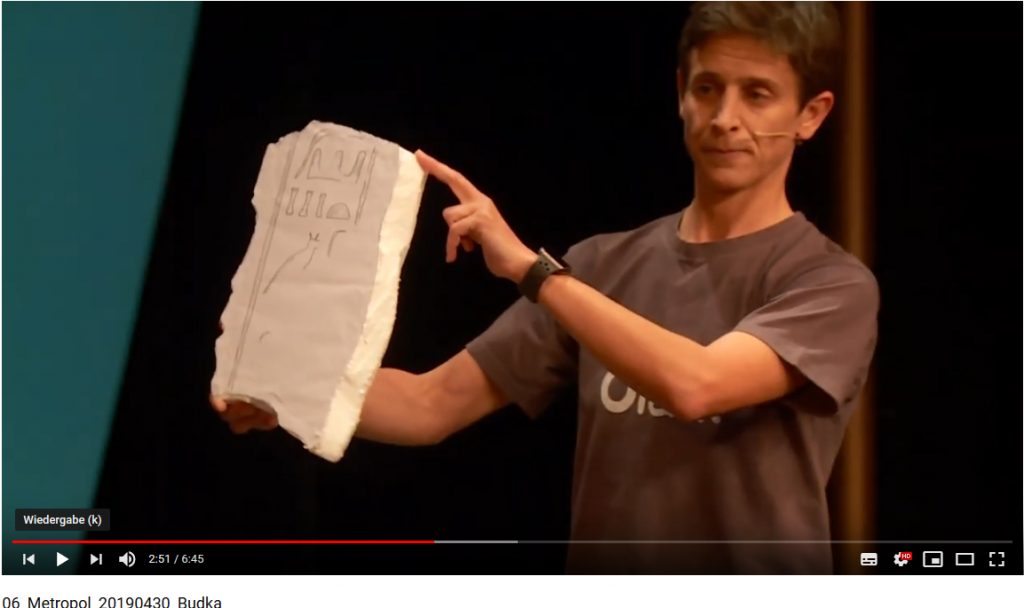
Two weeks ago, I had the great chance to participate at the Austrian Science Slam in Vienna. This evening was not only fun – I hope that I could also show some of the wonderful sides of my “dream job”, working as an archaeologist in Egypt and Sudan.

For those who are interested: all videos of the evening are now online, check out my performance on youtube.

I tried to explain the huge attractiveness of my field with my good old “friend” Nehi, viceroy of Kush under Thutmose III, and our recent finds related to him from Sai Island and Elephantine. In particular, I stressed why sealings like the one of Nehi we found at Sai are really worth as much as gold for us archaeologists.

My next opportunity to engage with the public – other than this blog! – will be the Munich SoapboxScience event in 2 weeks. This will be quite something different than standing on the stage in a theater like in Vienna and I am much looking forward to this! After all – it’s all about telling people what archaeologist really do, other than romantic phantasies and pictures created by Indiana Jones and Lara Croft. And: feedback from non-scientists is always really interesting and often surprising.