Sudanese Customs, Heritage, and Traditions – Ancient and Still Continuing: Gartag

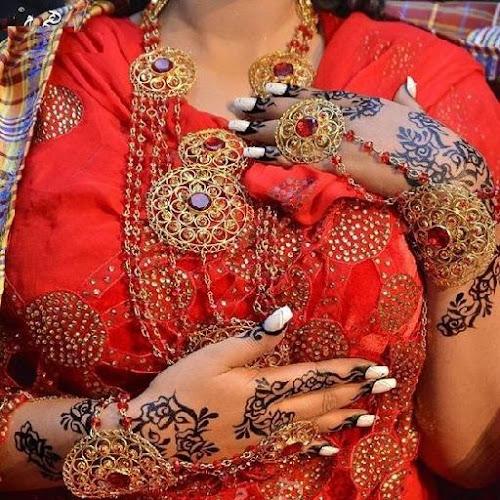
Gartag (الجرتق) is a ceremonial rite of passage (marriage, birth, circumcision) symbolizing fertility, blessing, and protection. It is a traditional ritual involving wearing gold, red silk, applying henna to the limbs, and using specific types of traditional perfumes.

Gartag Details:

– Wearing Gold: Gold is considered a symbol of blessing and fertility.

– Red Silk: Symbolizes good luck and protection.

– Henna: Applied to the limbs for protection and blessing.

– Traditional Perfumes: Used to enhance the celebratory and spiritual atmosphere.

Example for Sudanese Henna in the context of Gartag (https://500wordsmag.com/wp-content/uploads/2022/10/Sudanese-Henna.jpg)

Importance of Gartag:

– Enhances the sense of joy and celebration.

– Connects individuals with their cultural traditions.

– Strengthens social and familial bonds.

Gartag is an important part of Sudanese heritage and remains a vibrant practice in many communities.

UNESCO Adds Sudanese „Gartag“ to Representative List of Intangible Cultural Heritage of Humanity

New Delhi: UNESCO has inscribed the Sudanese „Gartag“ on the Representative List of the Intangible Cultural Heritage of Humanity. The organization announced this during the 20th session of the Intergovernmental Committee for the Safeguarding of the Intangible Cultural Heritage, held from December 8-13, 2025, in New Delhi, India.

The Gartag was officially registered as an element of „practices, rituals, and expressions for preservation, protection, abundance, and fertility in Sudan“ on the Representative List. The file was prepared by the National Council for Cultural Heritage and Promotion of National Languages, Ministry of Culture, Information, and Tourism, in collaboration with the Heritage House Center, the Sudanese National Commission for UNESCO, and the UNESCO Office in Sudan. This followed the requirements of the 2003 Convention for the Safeguarding of Intangible Cultural Heritage, with broad participation from heritage-bearing communities across Sudan.

Gartag is one of the most important living Sudanese rituals, rich in symbols and meanings deeply rooted in popular culture, tracing back to the Meroe civilization. This ritual embodies values of abundance, fertility, blessings, and protection, combining material elements like gold, silk, henna, and traditional perfumes with social and spiritual meanings that strengthen family bonds and community cohesion.

The inscription of Gartag is the second international recognition of Sudanese heritage in recent years, following the inclusion of Mawlid celebrations on the Representative List in December 2023. This achievement comes at a time when Sudanese cultural heritage faces significant challenges due to war conditions, making this recognition even more important and boosting national efforts to protect it.

The Secretary-General of the National Council for Cultural Heritage and Promotion of National Languages emphasized that the registration of Gartag reflects the resilience of Sudanese communities and their attachment to their heritage. It is a pivotal step toward ensuring the transmission of this legacy to future generations as an integral part of Sudanese cultural identity and shared human memory.

Sudanese Habits and Traditions: The presence of the zir

A so-called zir is a large pottery vessel for storing water and other materials. Local customs and traditions have developed in most parts, if not all, of Sudan, emphasizing the importance of having one or more zirs for storing drinking water. Additionally, the water that seeps out from the bottom of the zir is considered cleaner and is used for drinking by the sick or for making tea for those with a refined taste due to its higher purity.

The zir is well-known to most people, but some, especially the newer generation of Sudanese, particularly city dwellers, may not be familiar with it, as its use has decreased or become rare due to the availability of faster, easier, and more modern alternatives. However, the strongest survives!

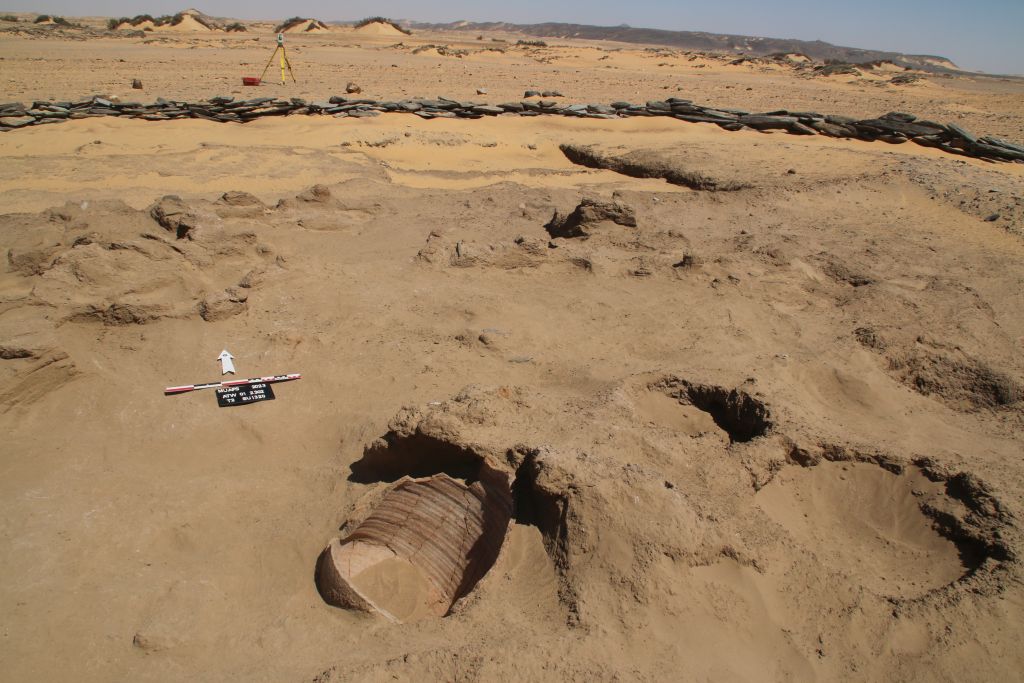
The zir has been known in Sudan since ancient times, with evidence found in archaeological excavations – such as the MUAFS excavations between Attab and Ferka and many other missions. It is studied by scholars and is part of ethnographic and folklore studies, as its production is accompanied by stories and legends. It also has various uses in Sudanese customs and cultures, such as in weddings and circumcisions.

Today, we discuss its continuity. During the war in Khartoum, I noticed that the use of the zir had increased. Previously, it had been particularly important in villages, unlike in cities such as Khartoum, where alternative water containers and drinking vessels were available. Altogether, the zir remains the preferred choice in Sudan.

There is a focus on creating a special place for it, whether by building it with green bricks or red bricks, or creating a seat with an iron canopy, known locally as a „Mazira“.

Example of a modern zir.

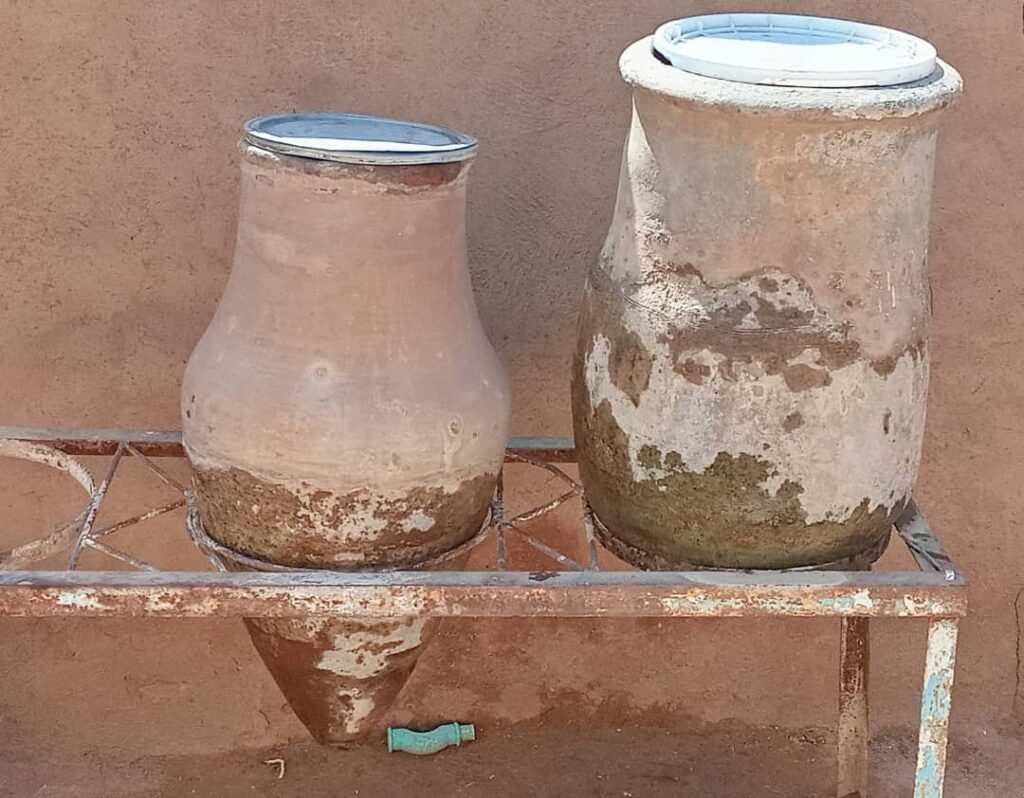
By chance, I learned a special method for cleaning it, particularly from the green fungi that grow on its exterior due to exposure to air and water seepage, known as „dew“.

Zir vessels before cleaning – note the „dew“ in the lower part.

Firstly, the zir is made by men in the field, but its care and cleaning are the responsibility of women, especially older women.

Despite the various types of zir in terms of size, shape, and color, depending on the materials used, there are also different methods of cleaning and decorating them from one region to another. There is also a preference for using black or red zirs.

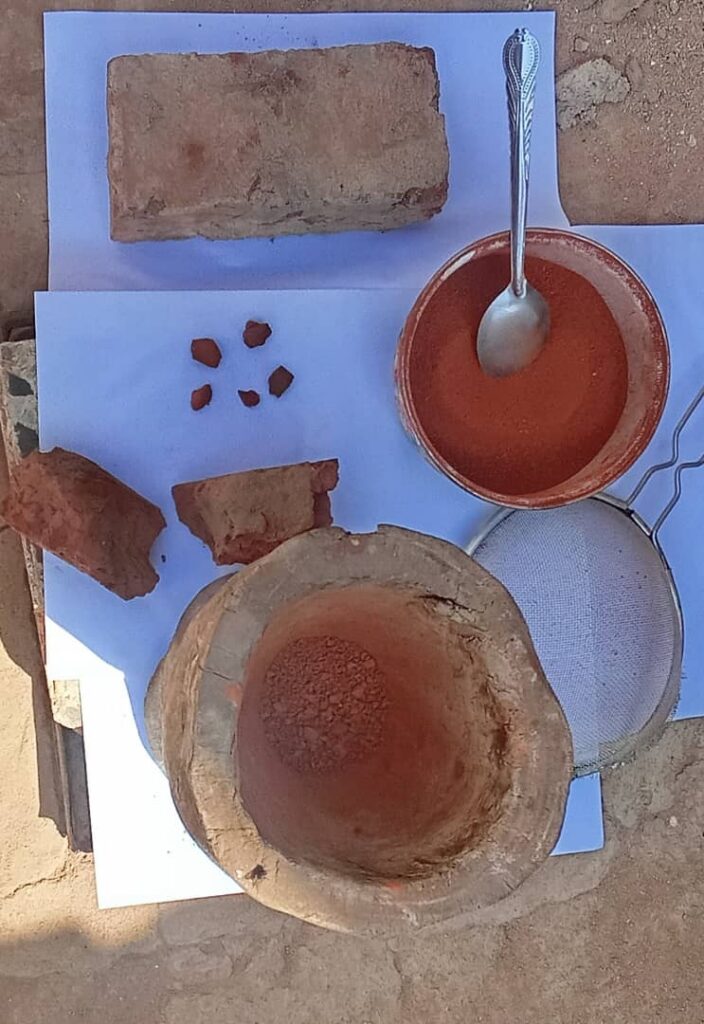
In Northern Sudan, both black and red zir are used, but there is a difference in decoration and polishing. The people of the Northern State and the River Nile State prefer to polish and clean the exterior using natural materials, often using red brick for red zir and black charcoal for black zir.

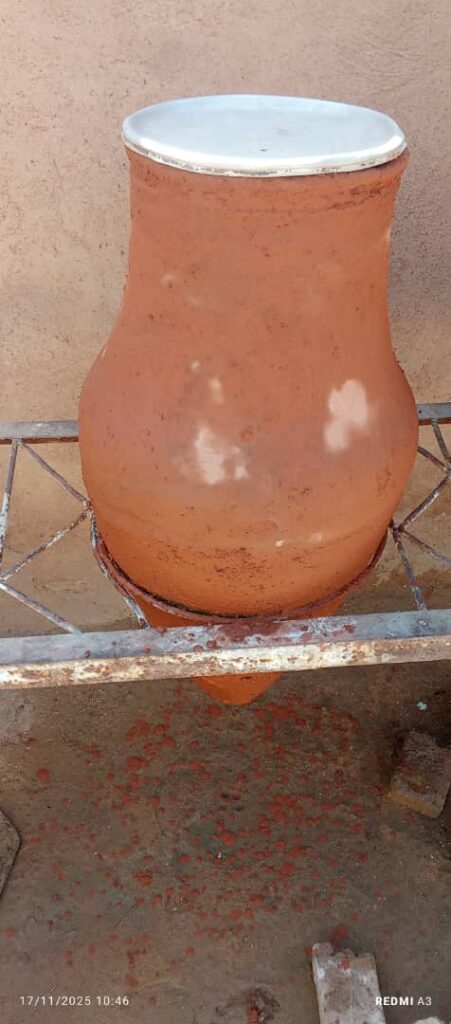
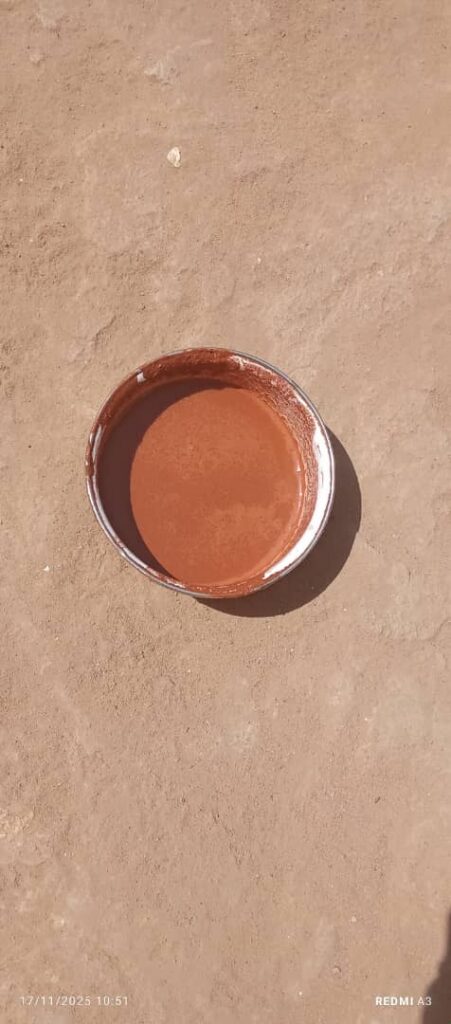
The red brick powder used for zir vessels.

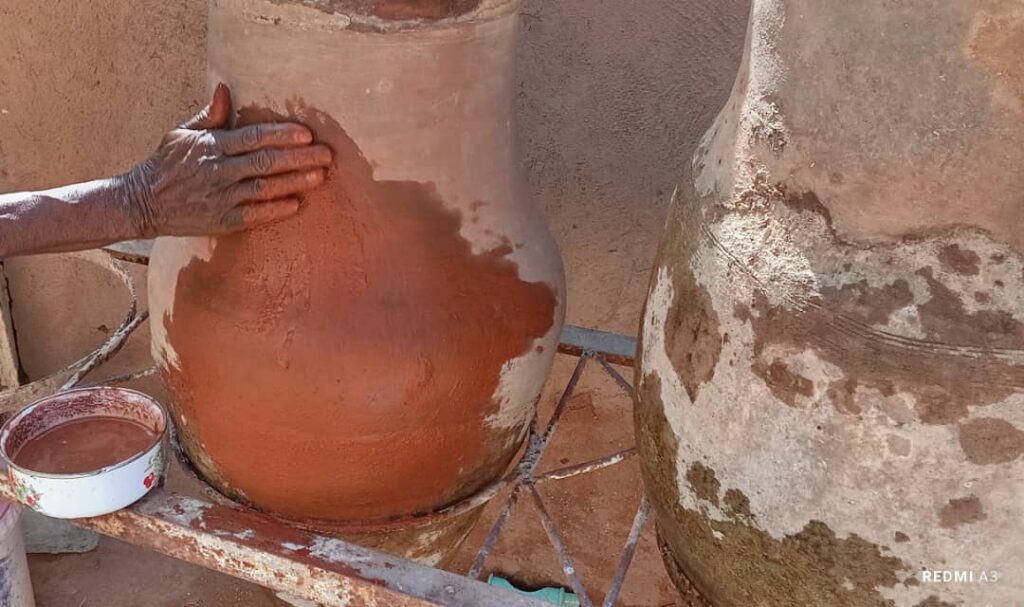
In Dongola and some Nubian regions, people often use red zirs or those with a reddish color, known to specialists, which is determined by the materials used and the firing process. In these regions, the lower part of the zir, which is more prone to green fungi, is painted with a coating, often red or yellow, and has become a distinctive mark of the people of Dongola.

I was fortunate to witness a cleaning process, polishing, and applying a special coating to one of the zir, and I documented the process with photos. The tools and materials used are natural and part of the heritage.

The method of decoration, colouring, and polishing with red brick powder and water.

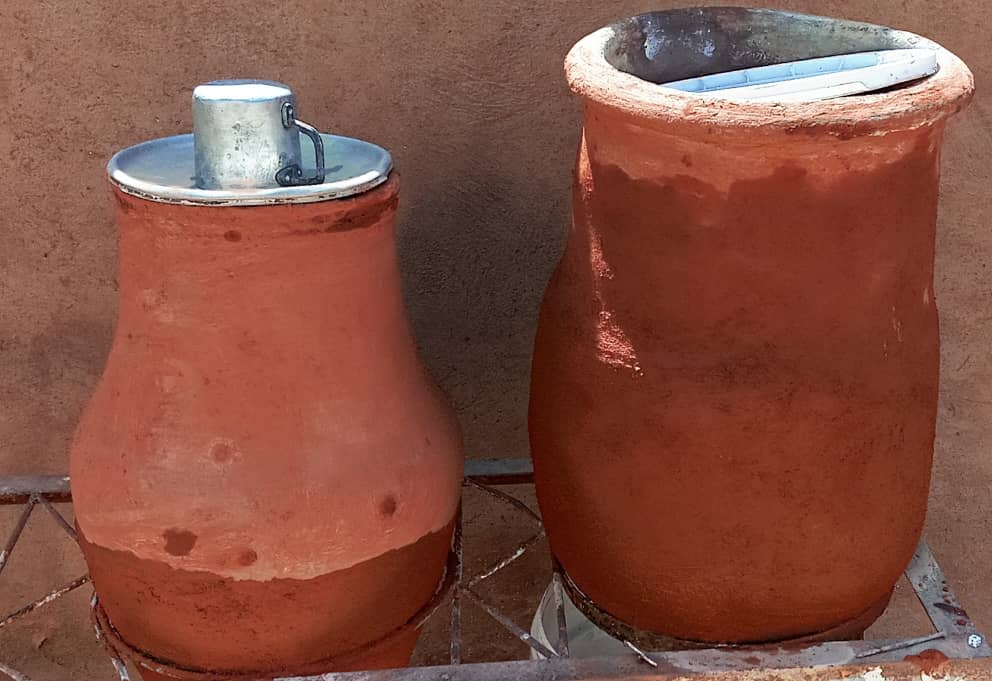
All of this is done to make the zir look clean and beautiful, and this method is usually used every month or more.

Zir vessels after cleaning.

These are customs, traditions, and tools that are part of the Sudanese heritage, and we hope they will continue for future generations.