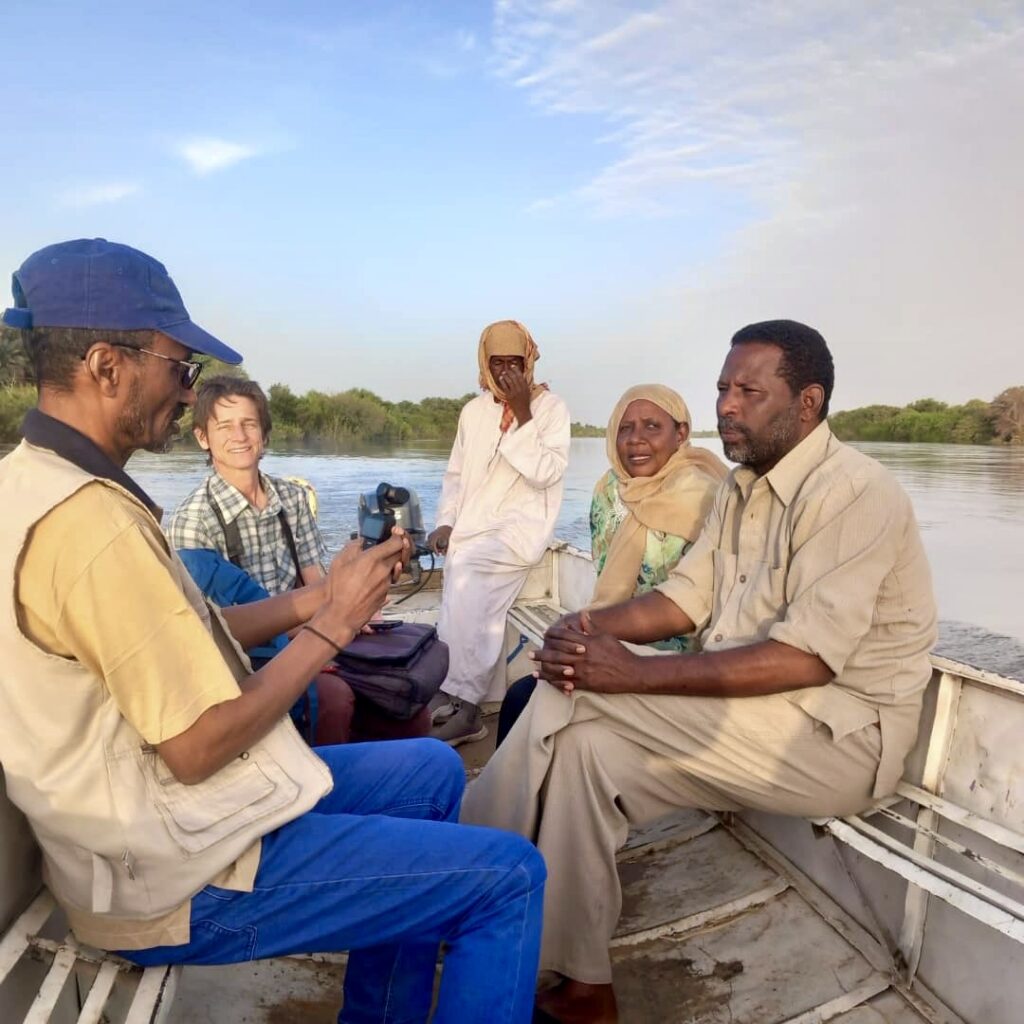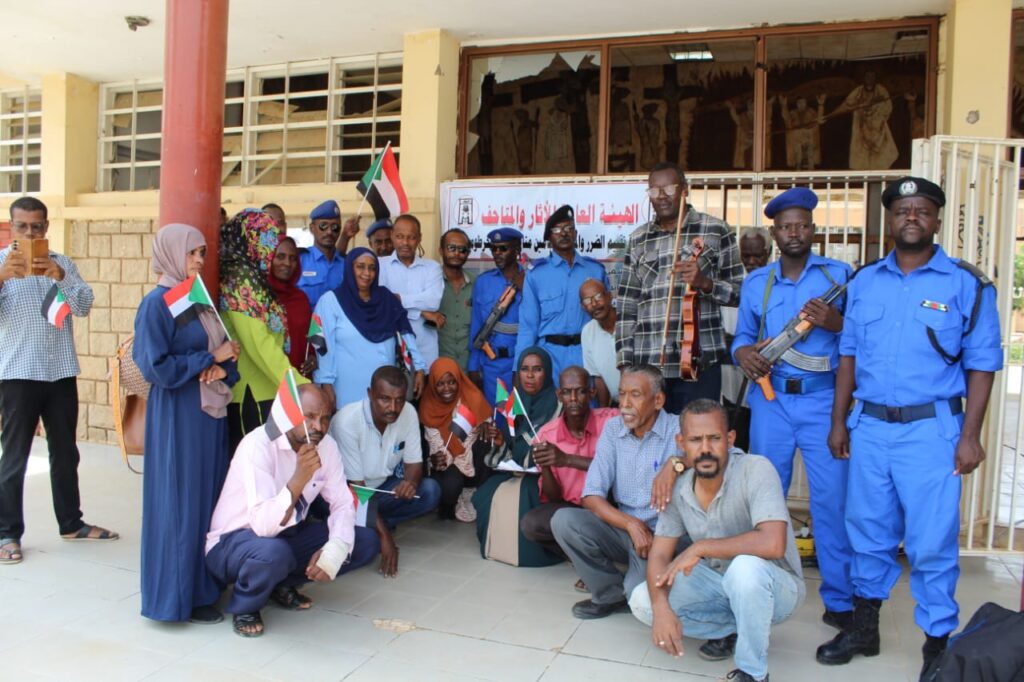
Archaeology Soldiers to Protect Sudanese Cultural Heritage

Greetings to all local and international colleagues working to protect Sudanese heritage and antiquities amidst the war in Sudan.

By Huda Magzoub Al-Bashir (Khartoum)

Protecting Archaeological Work and its Personnel in Times of War and Crisis

The Question of the Necessity of Archaeological Work in Times of War and Crisis

Archaeological work in times of war and crisis is not always necessary, but it can be important in some cases.

Importance of Archaeological Work in Times of War and Crisis:

1. Protecting Cultural Heritage: Archaeological teams can work to protect cultural heritage from destruction or looting.

2. Documenting Cultural Heritage: Archaeological teams can document cultural heritage before it is destroyed or looted.

3. Promoting Cultural Awareness: Archaeological teams can promote cultural awareness of the importance of cultural heritage.

Risks of Archaeological Work in Times of War and Crisis:

1. Risk of Injury or Death: Archaeological teams may face the risk of injury or death due to war and crisis.

2. Destruction of Archaeological Sites: Archaeological sites may be destroyed or looted due to war and crisis.

3. Difficulty Accessing Sites: It may be difficult to access archaeological sites due to war and crisis.

When should archaeological work be done in times of war and crisis?

1. When there is a risk to cultural heritage: If there is a risk to cultural heritage, archaeological teams should work to protect it.

2. When there is an opportunity to document cultural heritage: If there is an opportunity to document cultural heritage, archaeological teams should work on it.

3. When there is support from local authorities: If there is support from local authorities, archaeological teams should work to protect cultural heritage.

Ultimately, archaeological teams should assess the risks and benefits before deciding to work in times of war and crisis.

The security and academic role of archaeological work in Sudan in times of war and crisis is a vital and important topic. Sudan possesses a rich cultural heritage, but it faces significant challenges in protecting this heritage due to armed conflicts and the illicit trafficking of antiquities.

Security Role:

– Protecting archaeological sites from destruction and looting.

– Enhancing the security of museums and archaeological sites.

– Combating the trafficking of antiquities and cooperating with international organizations to recover looted artifacts.

Academic Role:

– Documenting archaeological sites and artifacts.

– Conducting archaeological research and studies to enhance understanding of Sudan’s cultural heritage.

– Promoting cultural awareness of the importance of archaeological heritage.

Challenges:

– Armed conflicts and illicit trafficking of antiquities.

– Lack of funding and technical expertise.

– Climate change and encroachment on archaeological sites.

Proposed Solutions:

– Enhancing international and regional cooperation to protect cultural heritage.

– Providing funding and technical expertise to enhance the security of archaeological sites.

– Launching awareness campaigns on the importance of cultural heritage.

It is essential that the Sudanese government, international organizations, and civil society work together to protect Sudan’s cultural heritage and promote awareness of its importance.

The collaboration between the Sudanese government, international organizations, academia, and civil society to protect Sudan’s cultural heritage in times of war and crisis has numerous benefits, including:

1. Enhancing cultural security: International and regional cooperation can help enhance the security of archaeological sites and museums, and prevent the trafficking of antiquities.

2. Providing funding and technical expertise: International organizations can provide the necessary funding and technical expertise to protect cultural heritage.

3. Promoting cultural awareness: Joint awareness campaigns can promote awareness of the importance of Sudan’s cultural heritage.

4. Protecting world heritage: Sudan possesses a rich cultural heritage, and international cooperation can help protect this heritage for the world.

5. Enhancing tourism: Cultural heritage can be an important source of tourism, and cooperation can help promote cultural tourism.

6. Enhancing regional cooperation: Cooperation in protecting cultural heritage can enhance regional cooperation between Sudan and neighboring countries.

7. Protecting cultural identity: Cultural heritage is an important part of Sudan’s identity, and cooperation can help protect this identity.

Overall, collaboration between the Sudanese government, international organizations, and civil society can play a significant role in protecting Sudan’s cultural heritage and promoting awareness of its importance.

The work of archaeological missions in Sudan in times of war and crisis has both benefits and risks:

Benefits:

1. Documenting cultural heritage: Archaeological missions can document archaeological sites and artifacts before they are destroyed or looted.

2. Protecting cultural heritage: Archaeological missions can help protect archaeological sites from destruction and looting.

3. Promoting cultural awareness: Archaeological missions can promote awareness of the importance of Sudan’s cultural heritage.

4. Training local staff: Archaeological missions can train local staff on methods of preserving cultural heritage.

5. Enhancing international cooperation: Archaeological missions can enhance international cooperation in the field of cultural heritage protection.

Risks:

1. Risk of destruction or looting: Archaeological sites may be vulnerable to destruction or looting due to war and crisis.

2. Risk of injury or death: Archaeological missions may face the risk of injury or death due to war and crisis.

3. Transfer of artifacts: War may lead to the transfer of artifacts abroad without the permission of the Sudanese authorities.

4. Deterioration of archaeological sites: War may cause deterioration of archaeological sites due to mishandling or lack of expertise.

Therefore, it is essential that archaeological missions in Sudan work in cooperation with the Sudanese authorities and international organizations, and follow necessary security and precautionary measures to protect Sudan’s cultural heritage.

The risk to archaeological mission personnel in Sudan in times of war is a vital and important topic. There are several risks facing archaeological mission personnel in Sudan, including:

1. Risk of injury or death: Archaeological missions may face the risk of injury or death due to war and crisis.

2. Kidnapping or detention: Archaeological mission personnel may be kidnapped or detained by armed groups.

3. Looting or theft of equipment: Equipment and tools used in archaeological missions may be looted or stolen.

4. Destruction of archaeological sites: Archaeological sites may be destroyed or looted due to war and crisis.

5. Difficulty accessing sites: It may be difficult to access archaeological sites due to war and crisis.

6. Lack of logistical support: There may be a lack of logistical support and resources necessary for archaeological missions.

7. Risk of disease: Archaeological mission personnel may be exposed to the risk of disease due to poor health conditions.

Therefore, it is essential that archaeological missions take precautionary and security measures to protect their personnel, such as:

1. Cooperating with local authorities: Working with local authorities and international organizations to ensure the safety of the mission.

2. Risk assessment: Assessing potential risks and taking necessary measures to mitigate them.

3. Providing logistical support: Providing logistical support and resources necessary for the mission.

4. Training personnel: Training personnel on security and precautionary procedures.

5. Continuous monitoring: Continuously monitoring the security situation and communicating with local authorities.

What are the responsible authorities for protecting global, international, and academic archaeological personnel in times of war and emergency?

There are several authorities responsible for protecting global, international, and academic archaeological personnel in times of war and emergency, including:

1. United Nations Educational, Scientific and Cultural Organization (UNESCO): UNESCO is the primary authority responsible for protecting world cultural heritage and provides support and assistance to archaeological personnel in times of war and emergency.

2. International Union of Academies: The International Union of Academies is an international organization that works to protect cultural heritage and promote international cooperation in the field of archaeology.

3. International Committee of the Red Cross and Red Crescent: The International Committee of the Red Cross and Red Crescent works to protect civilians, including archaeological personnel, in times of war and emergency.

4. International Atomic Energy Agency: The International Atomic Energy Agency works to protect cultural heritage from damage caused by nuclear radiation.

5. Non-Governmental Organizations: There are many non-governmental organizations that work to protect cultural heritage and archaeological personnel in times of war and emergency, such as BLAZ and Cultural Heritage in Danger.

6. Local Authorities: Local authorities in countries affected by war and emergency are responsible for protecting archaeological personnel and cultural heritage.

7. International Emergency Organizations: International emergency organizations such as Médecins Sans Frontières (MSF) and the International Committee of the Red Cross (ICRC) provide humanitarian assistance, including protection of archaeological personnel, in times of war and emergency.

These authorities work together to provide support and assistance to archaeological personnel in times of war and emergency, and to ensure the protection of cultural heritage.

Is it necessary for archaeological personnel to work in times of war and crisis?

Archaeological personnel working in times of war and crisis is not always necessary, but it can be important in some cases. Here are some points to consider:

Risks of archaeological work in times of war and crisis:

When should archaeological personnel work in times of war and crisis?

1. When there is a risk to cultural heritage: If there is a risk to cultural heritage, archaeological personnel should work to protect it.

2. When there is an opportunity to document cultural heritage: If there is an opportunity to document cultural heritage, archaeological personnel should work on it.

3. When there is support from local authorities: If there is support from local authorities, archaeological personnel should work to protect cultural heritage.

In conclusion, archaeological personnel should assess the risks and benefits before deciding to work in times of war and crisis.

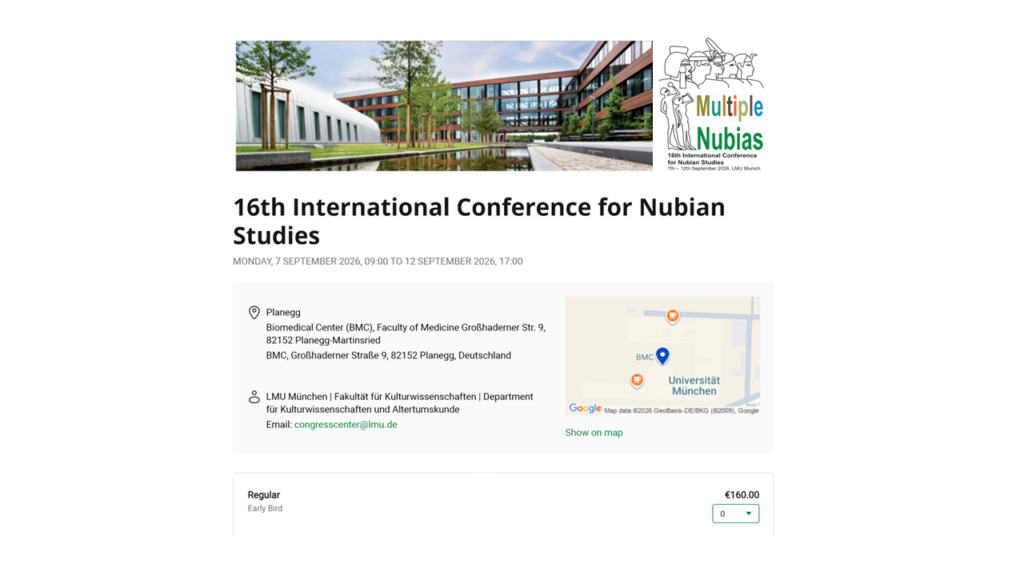
ICNS 2026 in Munich: You can now sign up!

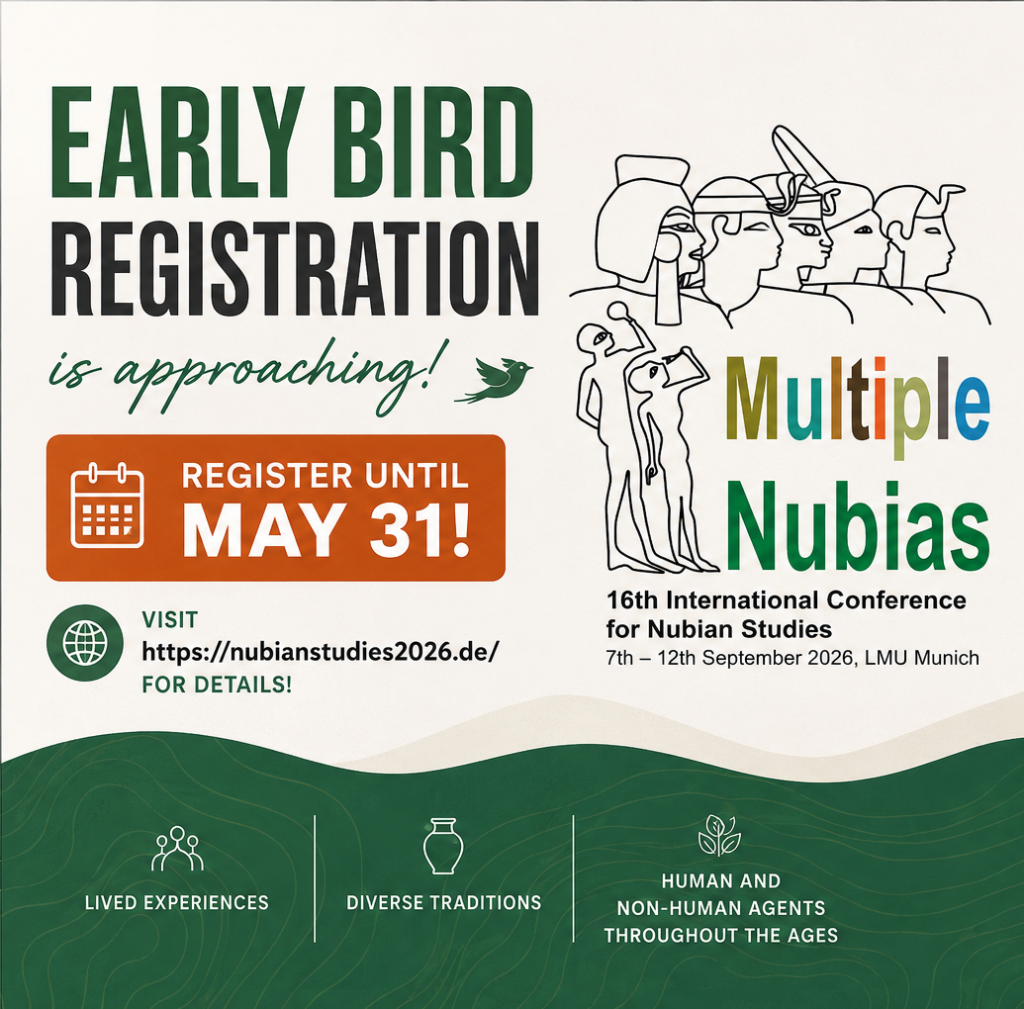
We are pleased to announce that registration for the 16th International Conference for Nubian Studies (ICNS) in Munich, Germany, hosted by LMU Munich from 7th September to 12th September 2026, is now open.

We would like to thank everyone who submitted proposals for oral and poster presentations. We currently have more than 260 presentations scheduled alongside posters which will be displayed throughout the conference. Please be advised that the provisional programme, which is now available on the conference website, is still subject to change.

The main theme of the Munich conference, Multiple Nubias, is linked to the latest research findings of the ERC DiverseNile project. New research is starting to show that ancient Sudan was a lot more diverse than we thought, and that there were actually several different forms of Nubia. This goes against the common idea that Nubia was just one single place in the past. So, we’ve invited in particular sessions and papers to look at different experiences, regional traditions and individual actors – both human and non-human – over the millennia. There will also be four keynote speeches that will look at the main theme of the conference from a diachronic perspective, employing a variety of methodological approaches.

In light of the ongoing situation in Sudan, particular emphasis will be placed on safeguarding and conserving cultural heritage, along with related initiatives and projects.

Please note that it is mandatory for all participants to register for the conference in order gain access. Online registration is now open, for details see https://nubianstudies2026.de/tickets/. Colleagues from Sudan and Egypt are entitled to complimentary tickets (free of charge). Due to the ongoing situation in Sudan, the conference will be a hybrid event.

We’re really looking forward to meeting all of you who are interested in Nubia and Sudan in Munich!

New publication on the contribution of archaeometric techniques to understanding landscape use and social practices in Bronze Age Sudan

I’m delighted to announce that a new publication is now available in open access. Me and my co-authors – Fabian Dellefant, Giulia D’Ercole, H. Albert Gilg, Rosemarie Klemm and Johannes H. Sterba – show how archaeometric techniques used as part of the DiverseNile Project can be used to investigate human-environment interactions in the Middle Nile during the Bronze Age.

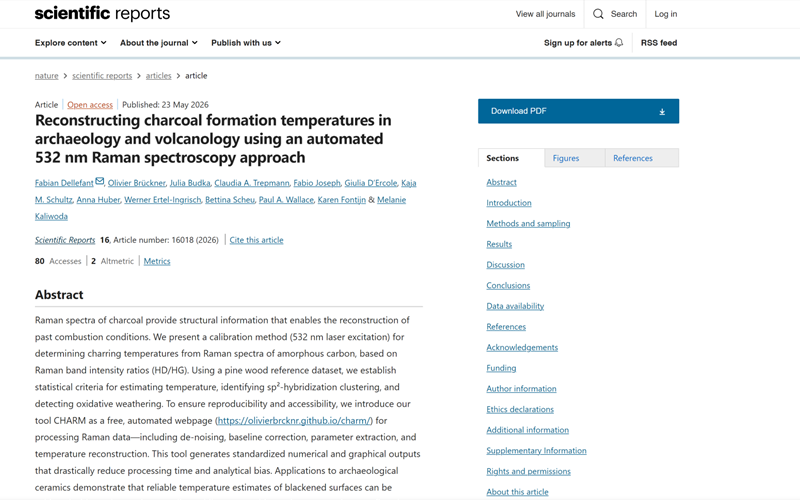
We present case studies from our recent investigation of landscape properties in the MUAFS concession area in northern Sudan, the Attab to Ferka region, and associated material remains. We also included some materials from Sai Island, the main urban site of this region. Our article looks at different ways to combine archaeology and geology, like taking rock samples and studying the composition of sandstones (see also an earlier blog post by Fabian). It also shows how these methods can be used to understand past landscapes and mobility patterns. We’re looking at the material culture, especially ceramics, in a bunch of different ways using a bunch of different scientific methods. We’re combining compositional bulk analysis (INAA) with mineralogical (XRD) and petrographic data via optical microscopy (OM) to check out the physical properties, where the ceramics came from and how they were made (you may want to check out an earlier blog post by Giulia). We’re also using Raman spectroscopy to see what temperatures the ceramics were fired at.

This paper shows how new developments in landscape archaeology and the archaeometry of material culture are helping us to understand the big ecological and social changes that happened in the Bronze Age Middle Nile. We think this combined analytical approach, which we’ve used in the Attab to Ferka region as an example, can also be successfully used in other regions around the world.

Full reference of the new publication:

Julia Budka, Fabian Dellefant, Giulia D’Ercole, H. Albert Gilg, Rosemarie Klemm & Johannes H. Sterba, Investigating human-environment interactions in the Middle Nile: The contribution of archaeometric techniques to understanding landscape use and social practices in Bronze Age Sudan, Egypt and the Levant 35, 2025, 101−134, https://austriaca.at/0xc1aa5572_0x00412ff6.pdf

A financial reward is being offered for the return of stolen artefacts in Sudan

The Ministry of Culture, Information and Tourism of Sudan renews its announcement of a financial reward for anyone who returns artifacts or provides information on their whereabouts.

  • An open call to all citizens to contribute to protecting Sudan’s cultural heritage
  • Recovering looted artifacts is a victory for national identity and preservation of its memory

Press Office – Ministry of Culture, Information and Tourism
Saturday, January 17, 2026

The Ministry of Culture, Information and Tourism announced the allocation of a financial reward for anyone who returns artifacts in their possession or provides accurate information on their whereabouts, as part of the state’s efforts to protect cultural heritage and recover looted Sudanese artifacts (see also this article).

This announcement comes days after the Minister of Culture, Information and Tourism, Mr. Khalid Al-Aiser, spoke in Port Sudan on Tuesday, January 13, 2026, during a ceremony to recover a large number of looted Sudanese artifacts, totaling 570 rare pieces, affirming that this step represents a victory for national identity and preservation of Sudan’s cultural memory.

The Minister said: „We extend a sincere and reassuring call to all citizens who have found or are keeping artifacts, that the state extends its trust and responsibility, and confirms that returning these artifacts through legal channels is a noble national act, contributing to protecting Sudan’s history and preserving its cultural memory, as a shared right that no individual owns, but is inherited by generations. We take this important national occasion to affirm the state’s commitment to incentivizing any citizen who returns artifacts in their possession or provides information on their whereabouts, with a financial reward in appreciation of their efforts.“

The Press Office, on behalf of the Ministry, renewed the announcement of the financial reward today, affirming the Ministry’s commitment to enhancing the protection of national heritage and encouraging community participation in preserving Sudan’s cultural heritage.

The Ministry confirmed that this initiative is part of efforts to strengthen community partnership, an open call to all citizens to contribute to protecting Sudan’s cultural heritage for future generations.

First article by DiverseNile available in Arabic

I am delighted to announce the first translation of a DiverseNile article into Arabic. Our dear friend and colleague, Elhassan Ahmed, translated the recent article entitled ‚Reconstructing Contact Space Biographies‘. You can find the full article here.

To kill two birds with one stone – making important texts more accessible to Arabic-speaking colleagues, but also alleviating the financial hardship of at least some Sudanese colleagues – the Sudan Cultural Emergency and Relief Fund (SCERF) of the International Society for Nubian Studies has launched a translation initiative. All articles translated to date can be found here: https://nubianstudies.org/maqalat/

I would like to express my sincere gratitude to the Collegium Aegyptium for their considerable financial support, which has made the translation of our article a reality.

New publication: Establishing a Dialogue

I am very happy to announce that a new article by Panos, Hassan, Julia and myself, on integrating evidence from domestic and funerary archaeology has just been published open-access in World Archaeology (https://doi.org/10.1080/00438243.2025.2567057). The article is part of a special issue on Domestic and funerary archaeologies in dialogue edited by Penny Bickle (University of York), Solène Denis (CNRS) and Stella Souvatzi (University of Thessaly), and I am very much looking forward to seeing the other papers in the issue.

In our paper ‘Establishing a dialogue – Settlement and funerary archaeology in northern Sudan’ we explore ways of combining methodological and interpretative frameworks from mortuary and settlement archaeology. We focus in particular on better understanding social dynamics and cultural entanglements in the Attab-Ferka region in the 2nd and 3rd millennium BC and how these can manifest in the archaeological record. The nature of cultural entanglements can vary considerably at different scales and spheres of society as well as being influenced by a range of internal and external causes, such as a changing environmental and socio-political landscape. By using both mortuary and domestic archaeological data as well as interdisciplinary approaches which take into account the local landscape, the project is striving for a more holistic perspective on the Attab-Ferka region at both the local scale and regional level in the longue durée

Kerma and Egyptian New Kingdom domestic and mortuary sites in the Attab-Ferka region, inset map highlights various 2-S-43 sites.

In this article we continue to consider the problematic use of labels in archaeological research, for example ‘Egyptian’ versus ‘Nubian’ by suggesting that ‘compound’ (after Stewart 2011) cultures may be a useful way of thinking about the ‘new’ cultures that can be created when different communities interact. This broadly moves away from some of the problematic connotations or idiosyncrasies of existing terminologies such as hybrid or syncretism. Overall, we hope this new article gives a good overview of many of the areas we are exploring as part of the DiverseNile project, and we will be elaborating on many of them in upcoming publications (including cultural entanglement; settlement patterns/urbanism; scales of analysis).

Reference

Stewart, C. 2011. “Creolization, Hybridity, Syncretism, Mixture.” Portuguese Studies 27 (1): 48–55. https://doi.org/10.1353/port.2011.0007

Risks of Climate Change and Projections on Cultural Heritage in Sudan?

Autumn Season and its Impact on Antiquities in Sudan

Sudan experiences a desert climate with minimal seasonal variation, but the autumn season can still have an impact on archaeological sites. The effects of climate change and environmental factors can exacerbate the deterioration of ancient structures and artifacts.

Impacts of the Autumn Season on Antiquities in Sudan:

  • Increased Rainfall: Heavy rainfall can cause erosion and damage to archaeological sites, especially those in fragile or unstable conditions.
  • Strong Winds: Strong winds can lead to the degradation of structures and the loss of artifacts.
  • Flooding: Flooding can damage archaeological sites, especially those located near rivers or in low-lying areas.

Conservation Efforts:

  • Site Monitoring: Regular monitoring of archaeological sites to assess the impact of environmental factors and take necessary conservation measures.
  • Risk Assessment: Conducting risk assessments to identify potential threats and develop strategies for mitigation.
  • Community Engagement: Engaging local communities in the conservation and protection of archaeological sites.

Importance of Protecting Sudan’s Cultural Heritage:

Sudan’s cultural heritage is invaluable, and it is essential to protect it from environmental degradation and human impact. Conservation efforts are necessary to preserve the country’s rich history and cultural identity for future generations.

Challenges and Opportunities:

  • Climate Change: Climate change poses a significant threat to Sudan’s cultural heritage, and it is essential to develop strategies to mitigate its impacts.
  • Sustainable Development: Balancing economic development with cultural heritage conservation is crucial to ensure the long-term preservation of Sudan’s archaeological sites.
  • International Cooperatio: International cooperation and support are necessary to support conservation efforts and protect Sudan’s cultural heritage.

Climate change poses a significant threat to cultural heritage in Sudan, as it can lead to the deterioration and erosion of archaeological sites, especially with harsh weather conditions such as heavy rainfall and strong winds. Rising sea levels can also lead to the submersion of coastal heritage sites and erosion of archaeological and architectural structures. Additionally, changes in the ecosystems surrounding heritage sites can affect their ecological balance and further complicate conservation efforts.

Main Impacts of Climate Change on Cultural Heritage in Sudan:

  • Erosion of archaeological sites: Heavy rainfall and strong winds can cause erosion and deterioration of archaeological sites.
  • Rising sea levels: Can lead to the submersion of coastal heritage sites and erosion of archaeological and architectural structures.
  • Changes in surrounding ecosystems: Can affect the ecological balance around heritage sites and complicate conservation efforts.

Efforts to Protect Cultural Heritage in Sudan:

  • Climate risk assessment: Climate risks are assessed for cultural sites to determine necessary protection measures.
  • Emergency plans: Emergency plans are developed to protect heritage sites from climate change impacts.
  • Use of technology: Remote sensing and 3D laser scanning techniques are used to assess the condition of heritage sites and monitor surroundings climate

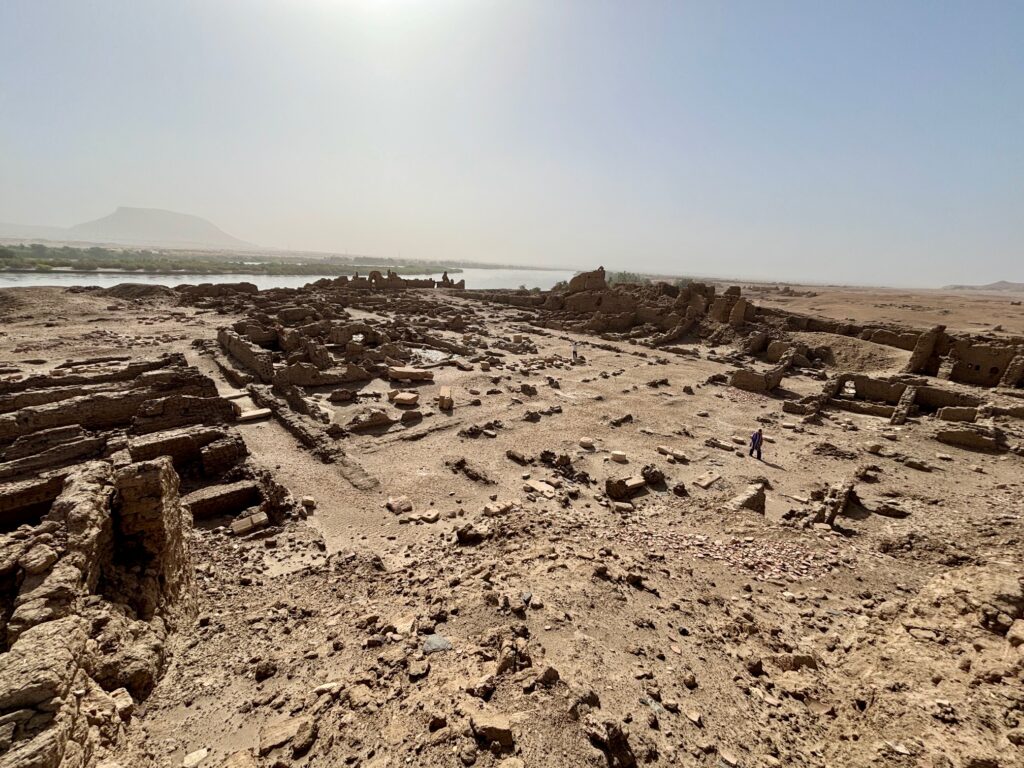
Environmental changes, floods, and mining pose a greater threat to antiquities than wars!

There are archaeological sites in Sudan that are affected by the environment, especially in the northern regions of Dongola. Some of these sites include:

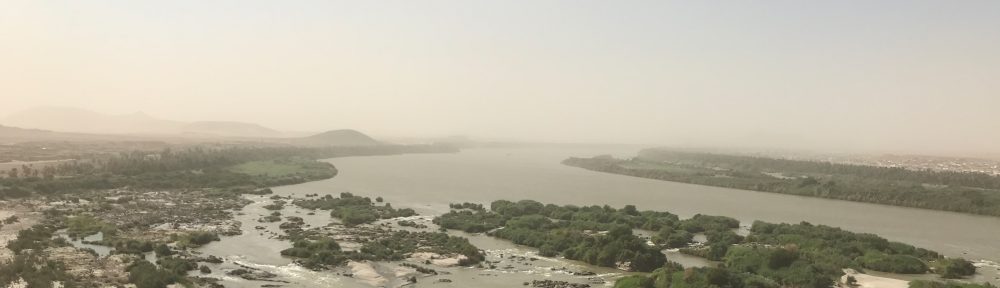
  • Sai Island Archaeological Site: An island containing tombs, Pharaonic sites, and graves dating back to thousands of years, with recent signs of severe mining activities on the island.
A view from Sai Island.
  • Old Dongola: A historical city containing archaeological sites consisting of palaces, remains of churches, tombs, and domes, considered one of the important cities during the Middle Ages, affected by rising groundwater levels or Nile floods.
  • Other Archaeological Sites in Sudan: Such as Kerma, suffering from the impacts of climate change, especially soil erosion, floods, and landslides.
  • Al-Bajrawiya: These archaeological sites are affected by strong winds and heavy rains, causing erosion to structures and antiquities.
  • Additional Archaeological Sites in the Nile River State and the Northern State: All are affected by climate change, desertification, and environmental degradation.
  • Meroe Archaeological Sites: Affected by climate change and desertification, leading to the deterioration of ancient structures and antiquities.
  • The Royal City of Meroe: All these are important archaeological sites affected by environmental changes, desertification, and environmental degradation.
Situation at the Royal City of Meroe.
One of the temples at the Royal City of Meroe and glimpses of environmental change.

Some sites received attention and archaeological work during the Qataris project to protect Nubian antiquities, but environmental changes were stronger, requiring more serious and urgent attention to preserve them from deterioration and loss. Again, with recent environmental changes in Sudan, these sites, along with newly discovered ones, are affected by climate change, desertification, and environmental degradation, threatening their destruction and the loss of ancient cultural heritage in Sudan.

It’s crucial to note that these archaeological sites require special attention to protect them from deterioration and ensure their continuity for future generations.

New publication: Perspectives on the post-colonial period in the Attab to Ferka region

Within the DiverseNile project, we focus on developments and dynamics in the Bronze Age, particularly in the Late Bronze Age. The collapse of the Late Bronze Age is also a key consideration here, and I have recently revisited Post New Kingdom evidence from the MUAFS concession.

I am delighted that a publication is now available. In this new article (Budka 2025), I have attempted to shed new light on an old topic. In recent decades, the concept of a ‘Dark Age’ in ancient Sudan at the beginning of the first millennium BCE has increasingly been questioned within Nubian archaeology. This is primarily due to new archaeological discoveries at urban sites such as Tombos and Amara West, as well as new theoretical approaches that have emerged since the post-colonial shift. My recently published study aims to demonstrate that remote sensing, surveying and excavations in the Attab to Ferka region of Sudan have also yielded significant evidence of sustained habitation following the termination of Egyptian colonial rule over Nubia. Studies of settlement patterns and pottery, in particular, enrich our understanding of people’s lives between 1070 and 750 BCE, allowing us to shed light on dynamic processes, local forms of resilience and innovation.

This new understanding of the resilience of communities after the collapse of colonial Nubia under Egyptian rule enables a more nuanced interpretation of the development of the Napatan Empire and challenges the conventional concept of secondary states.

The Attab to Ferka case study shows that marginalised regions and communities made a significant contribution to cultural dynamics and achievements in Sudan during the first millennium BCE.

I’m very much looking forward to receiving feedback on this discussion and my theory!

Reference

Budka, J. 2025. The End of the Egyptian New Kingdom in Colonial Nubia: New Perspectives on Sociocultural Transformations in the Middle Nile. Humans. 2025; 5(4):26. https://doi.org/10.3390/humans5040026

Archaeology in the Gezira Reach: Forthcoming DiverseNile Seminar

As the summer season draws to a close, it is also the case that the short hiatus from the DiverseNile Seminar is coming to an end. It is with great pleasure that I announce the forthcoming DiverseNile Seminar, scheduled to take place on 2 September, presented by Mohammed Alfatih Hayati.

Mohammed is currently employed as an Assistant Professor in Archaeology at the Department of Archaeology of the University of Khartoum in Sudan. His particular area of expertise is the Later prehistory (Mesolithic-Neolithic) of Sudan. Mohammed was awarded his PhD in Archaeology from the University of Khartoum in 2016. He is a member of numerous archaeological field projects in Sudan.

The subject of Mohammed’s presentation is „Archaeology in the Gezira Reach. Current State and Future Challenges“. In the context of the ongoing war in Sudan, it is imperative to consider the impact on both the Sudanese people and the nation’s substantial cultural heritage and rich archaeological sites. Current assessments and future challenges pertaining to significant archaeological regions, such as the Gezira, must be addressed in order to formulate effective strategies for the preservation and protection of these invaluable assets.

I’m very grateful to Mohammed for speaking in our Seminar Series and I’m excited to hear his update about archaeology in the Gezira Reach. I hope many of you will be able to join!

Fuelled with inspiration: back from SAfA 2025

Conferences often provide plenty of new ideas and social and scientific encounters, as well as fresh input. This was exactly the case last week when the DiverseNile team participated in the SAfA 2025 conference.

The 27th biennial meeting of the Society of Africanist Archaeologists (SAfA 2025) took place at the University of the Algarve in Faro, Portugal, from 21 to 26 July 2025. The venue was lovely, Faro is a beautiful place to visit in the summer. The meeting was a great success thanks to the excellent organisation and rich programme, which included excellent keynote speakers and a highly inspiring plenary event.

Alongside Elena Garcea and Giulia D’Ercole, I organised a session titled „Investigating settlements versus cemeteries. Competing or complementing interests? A View from Sudan“.

We considered this session to be relevant for the following reasons:

Firstly, there are some general aspects to consider. Throughout history, research in Sudan has clearly focused more on burials than on settlements. Cemeteries are considered the most significant social units, providing vital insights for archaeological interpretation and the reconstruction of social, economic, and gender patterns. Ideal case studies are those that include both settlements and cemeteries, although these are often not contemporary with each other.

Furthermore, there are also some personal reasons for organising this session. The three of us have worked on Sai Island and developed a longue durée approach that considers both settlements and tombs. My current DiverseNile project clearly links to this, combining an assessment of domestic and mortuary sites (building on what we have already done during the AcrossBorders project on Sai Island).

Me introducing the theme of the session (photo: H. Aglan).

During our session, an impressive line-up of speakers (including our Sudanese friends and colleagues Ahmed Nassr and Mohamed Bashir) presented the various methodological and theoretical aspects, as well as the challenges and opportunities, of this field of study. Drawing on case studies from different regions of ancient Sudan, particularly the Middle Nile Valley, the Jezira plain and the hinterlands, the subject was explored in depth.

Case studies from the Mesolithic, Neolithic, Bronze Age, Meroitic, Post-Meroitic and Medieval periods were presented. We also discussed social patterns and cultural behaviours throughout history. This allowed us to link the assessment of settlement patterns with burial customs.

I am particularly pleased that Hassan Aglan discussed the relevance of the Kerma cemeteries within the MUAFS concession (highlightening our work at GiE 003), and that Chloe Ward presented innovative ideas regarding settlement patterns within the same area.

To conclude, our perspective on the topic is informed by observations from various periods and regions of Sudan. The session addressed the past, present and future of investigating settlements and cemeteries, an area in which much remains to be done.

We would like to thank all of our speakers, all participants and the organisers of SAfA 2025 again for now. Personally, I am already looking forward to the next meeting in 2027.